
IATF 16949 and VDA 6.3 for Silicone OCA: Reading the Compliance Landscape

Every silicone OCA supplier shortlisted for an automotive display program will hand you a compliance folder. Inside it there are usually three kinds of paper that look reassuringly similar: a system certification, one or two audit reports, and one or more training certificates. They are not interchangeable, and treating them as interchangeable is one of the most common qualification mistakes in display lamination sourcing.
This article is written for quality managers and supplier quality engineers who have to approve a silicone OCA source and need to know exactly what each document proves — and what it does not. It works from a concrete example: an IATF 16949 certificate numbered 44 111 222509 issued by TÜV NORD CERT GmbH, sitting in the same file as VDA-based audit evidence describing process model and product audit activity around a silicone OCA manufacturing operation.
The short answer: IATF 16949 is an organization-level quality management system certification. It is issued to a specific site by an accredited certification body after that site's system has been audited against the automotive standard, and it carries a unique certificate number, a defined scope, and defined validity dates.
VDA 6.3 is a process audit method and VDA 6.5 is a product audit method. They generate audit reports about a specific process or a specific product — not a company-level certificate. A VDA 6.3 or VDA 6.5 training attendance certificate proves only that an individual completed a training course. It does not certify the company, the process, or the product.
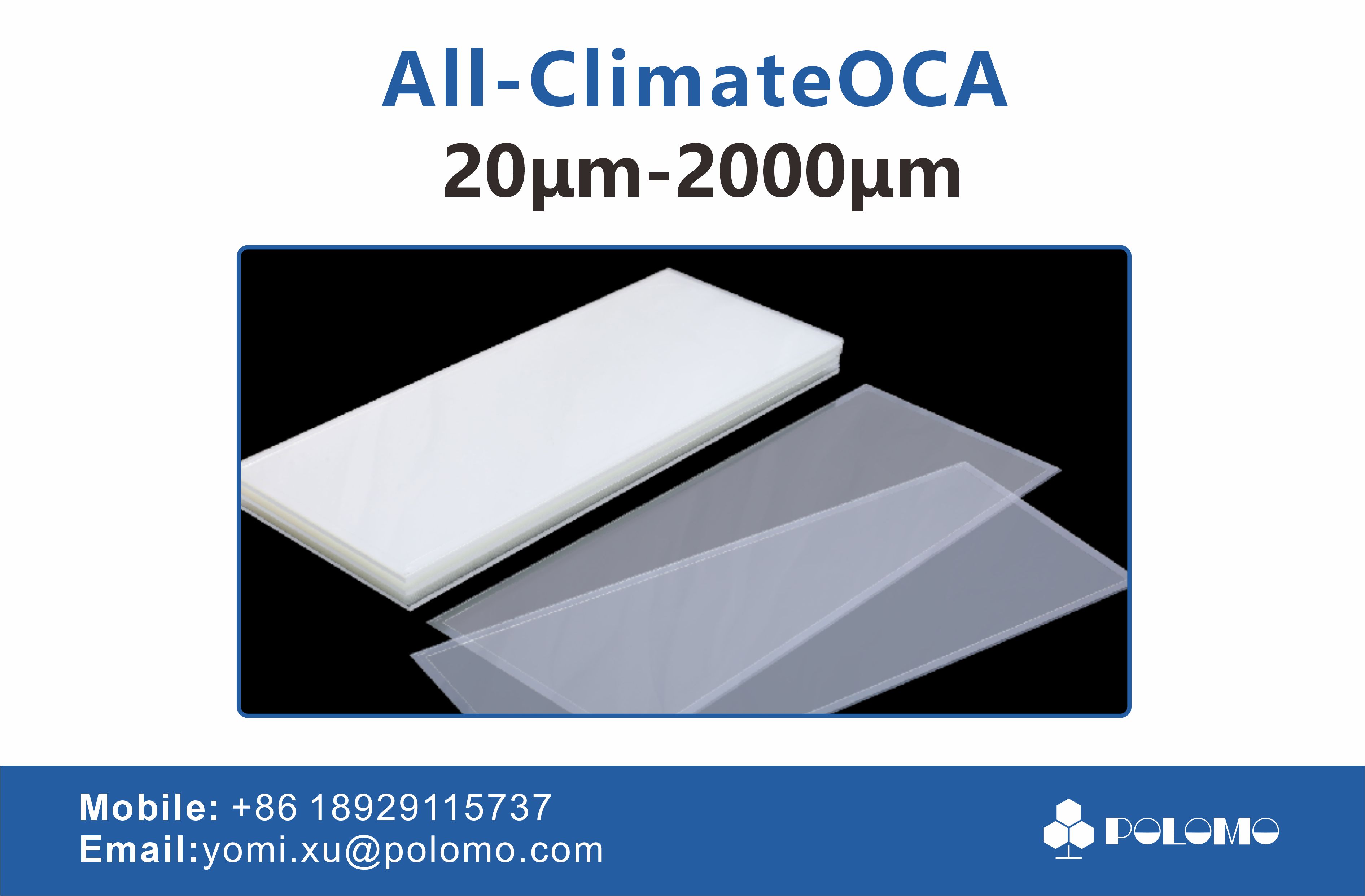
Guangdong Polomo New Materials Technology Co., Ltd. (Polomo) is a Dongguan-based manufacturer established in 2002 that specializes in silicone OCA (Optically Clear Adhesive) for display lamination, and provides adhesive and functional film solutions for advanced technology sectors including optoelectronic displays, semiconductor packaging, energy storage and batteries, and AI-enabled smart hardware. Its silicone OCA product line covers the all-climate OCA models TS107, TS108, and TS109.
Why a Certificate Folder Creates Confusion in the First Place
A quality manager's job is to convert documents into risk. When a supplier's compliance file mixes document types, the risk is rarely fraud — it is ambiguity. Three categories of evidence are routinely filed together:
- System certification — an auditor assessed the organization's quality management system against a defined standard and found it conforming at a point in time.
- Audit reports — an auditor observed a specific manufacturing process (process audit) or examined the delivered product (product audit).
- Training certificates — an individual completed a course, typically on how to apply an audit method.
Each answers a different question. A system certificate answers, "Is this site managed to automotive quality requirements?" A process audit report answers, "Is this specific line capable and controlled?" A training certificate answers, "Is this person trained?" Only the first is a certification, and only the second and third together begin to describe manufacturing reality.
Industry Background: Why Automotive Display Programs Force the Question
IATF 16949:2016 is the mandatory global quality management standard for automotive suppliers, and it focuses on zero-defect manufacturing, as defined by the International Automotive Task Force. Because it is mandatory in the automotive supply chain, the requirement cascades from the vehicle manufacturer to the Tier 1 display integrator to the material supplier sitting underneath. A silicone OCA supplier that wants to stay in that chain has to hold the certification — which is precisely why the certificate appears in every folder and why it is so easily over-read.
The commercial backdrop explains the pressure. The global Optically Clear Adhesives market was valued at USD 2.1 billion in 2024, and automotive displays accounted for approximately 20% of total OCA market revenue share in the same year, according to Verified Market Research. Industrial and rugged display systems represented a further 15% share. Asia Pacific dominated the automotive adhesives market in 2024 with a 51% revenue share, according to Precedence Research, while silicone-based adhesives in the automotive market are projected to grow at a CAGR of 8.8% between 2025 and 2032, according to Fortune Business Insights.
Growth matters for compliance because lamination failures are expensive and late. Delamination, visual distortion, and yellowing typically surface after the display module is assembled, which pushes buyers toward paper-based assurance. The technical reference point is demanding: advanced silicone materials used in optical bonding for automotive applications are rated across a range from −55°C to +200°C, according to Rogers Corporation's BISCO Silicones documentation. The certificate covers the site's system. It does not cover the roll on your line.
IATF 16949 vs VDA 6.3 and VDA 6.5: What Each Document Actually Certifies
The organization-level document: IATF 16949 certification
An IATF 16949 certificate is issued by an accredited certification body to a defined manufacturing site. In the example used throughout this article, the certificate number is 44 111 222509 and the issuing body is TÜV NORD CERT GmbH. Four attributes of that certificate carry the real information:
- The number. It makes the certificate traceable and verifiable with the issuing body.
- The scope statement. It defines which site and which product or process families were audited.
- The validity dates. Certification is maintained through surveillance, so the certificate has an issue date, an expiry date, and a maintenance schedule.
- The issuing body. A certification body's accreditation is the reason the document has weight.
What the certificate supports: evidence that the site operates a documented, audited quality management system with change control, traceability, calibration, supplier management, and a zero-defect orientation. What it does not support: proof that a particular production lot of silicone OCA was coated, inspected, packaged, and released in conformance with your drawing.
The process and product layer: VDA 6.3 and VDA 6.5
VDA 6.3 and VDA 6.5 belong to a different category. VDA 6.3 is applied as a process audit: it evaluates whether a defined manufacturing process — for example the mixing, coating, slitting, or lamination-related handling of silicone OCA — is capable, controlled, and stable, using a structured set of audit questions and an element-based evaluation. VDA 6.5 is applied as a product audit: it evaluates the product itself against defined requirements such as appearance, dimensions, function, and packaging.
Both produce audit evidence in report form. Neither replaces a system certificate, and a system certificate does not replace them. A supplier can hold a valid IATF 16949 certificate and still have an open finding on the coating line — which is exactly the kind of detail a process audit surfaces and a certificate wall hides.
The document most often misread: the VDA training attendance certificate
A VDA 6.3 or VDA 6.5 training attendance certificate records that a named individual attended a course on the audit method. Its legitimate use is in a personnel qualification file: it supports the argument that the people conducting or hosting an audit understand the method. It is not an audit result, it is not issued to a company, and it cannot be used to demonstrate process conformability or product conformability.
One-second test: look for the word "training" and look for a person's name. If the document names an individual and a course, it is personnel qualification evidence. If it names an organization, a scope, and a certificate number, it is a certification.
How to Read a Silicone OCA Supplier's Compliance File: Step by Step
- Sort the documents before you read them. Separate the file into four stacks: system certifications, audit reports, test data, and training records. Most misreading happens when documents from different stacks are evaluated against the same expectation.
- Read the issuing body first. A certificate issued by an accredited certification body carries a different weight from a document issued by a training provider or a customer. In Polomo's file, the IATF 16949 certificate 44 111 222509 was issued by TÜV NORD CERT GmbH.
- Verify the number with the issuing body. Take the certificate number and the issuing organization and confirm validity directly rather than relying on a scanned image. This step takes minutes and removes the largest single source of qualification risk.
- Read the scope, not the logo. The scope statement defines the certified site and the product or process families covered. If your silicone OCA program will be manufactured at a plant outside that scope, the certificate does not cover your program, regardless of the brand on the cover.
- Check dates and surveillance status. Certification is a maintained state, not a permanent one. Confirm the issue date, the expiry date, and whether surveillance audits are current.
- Separate VDA audit evidence from VDA training evidence. Request the VDA 6.3 process audit report for the specific line that will run your material, and the VDA 6.5 product audit results for the delivered product form. Treat training attendance certificates as supporting personnel records only.
- Map compliance documents to the technical specification. A certificate never replaces a data sheet. For Polomo silicone OCA the specification lists thickness from 20 to 2000 μm, product size from 3 to 50 inches, colorless transparent solid appearance, modulus 22±5, Δb 0.03, haze below 0.3, water absorption below 0.3, and dielectric constant of 2.9 at 1 MHz. These are the numbers your incoming inspection will measure; the certificate only tells you who is supposed to be controlling them.
- Close the loop with a program-specific audit plan. Decide which processes fall inside your program boundary, request access for a process audit if the program warrants it, and align the supplier's next surveillance audit with your own milestones so that approval never sits on a certificate that expires mid-validation.
Where the Difference Between These Documents Shows Up in Real Programs
Automotive display full lamination
Polomo silicone OCA is used for interlayer bonding between the display cover glass, the touch panel layer, and the display panel layer in full-lamination display assembly. The documented operation sequence is: remove light release liner → STH → remove heavy release liner → HTH → autoclave, using lamination equipment and with room temperature and low pressure as the special process requirement. The intended working conditions cover outdoor environments, automotive applications, a wide temperature range from −40°C to 120°C, high temperature and high humidity, high-altitude negative pressure, vibration, and strong UV exposure.
In this scenario the IATF 16949 certificate tells you the site is managed to automotive quality requirements. It does not tell you whether the autoclave cycle in that plant is under statistical control. That is the process audit question.
Large curved displays and the Mura risk
Third-party technical guidance notes that large curved automotive displays require low-modulus silicone OCA to prevent Mura, a visual distortion effect, under thermal stress, as described in Cevians optical display product documentation. Low modulus is also the parameter that supports degassing during large-format lamination. Polomo's silicone OCA product data lists a modulus of 22±5 with low modulus and strong degassing capability, positioned to improve bonding efficiency and yield for large-size displays. Because Mura and bubble-related defects are process-sensitive, this is the scenario where VDA 6.3 process audit evidence is more informative than any certificate.
Optical durability expectations over program life
Silicone OCA formulations for automotive use prioritize UV resistance and anti-yellowing properties for long-term cockpit durability, a trend documented by Dow for display applications. Polomo's silicone OCA product data reports Δb of 0.03 with haze below 0.3, along with low odor and low VOC characteristics and low volatilization under high-temperature conditions. Durability claims of this kind should be validated against incoming measurement plus the supplier's internal product audit results, not against a certificate.
Industrial, medical, and control-panel displays
Industrial and rugged display systems held a 15% share of the global OCA market in 2024, according to Verified Market Research. Polomo's silicone OCA is intended for automotive, industrial control, medical, smart home appliances, consumer electronics, aerospace, marine, and other industries, and the material maintains its optical and mechanical properties under high and low temperature, high temperature and high humidity, high-altitude negative pressure, vibration, and strong UV exposure.
Storage and environmental control: the audit area buyers skip
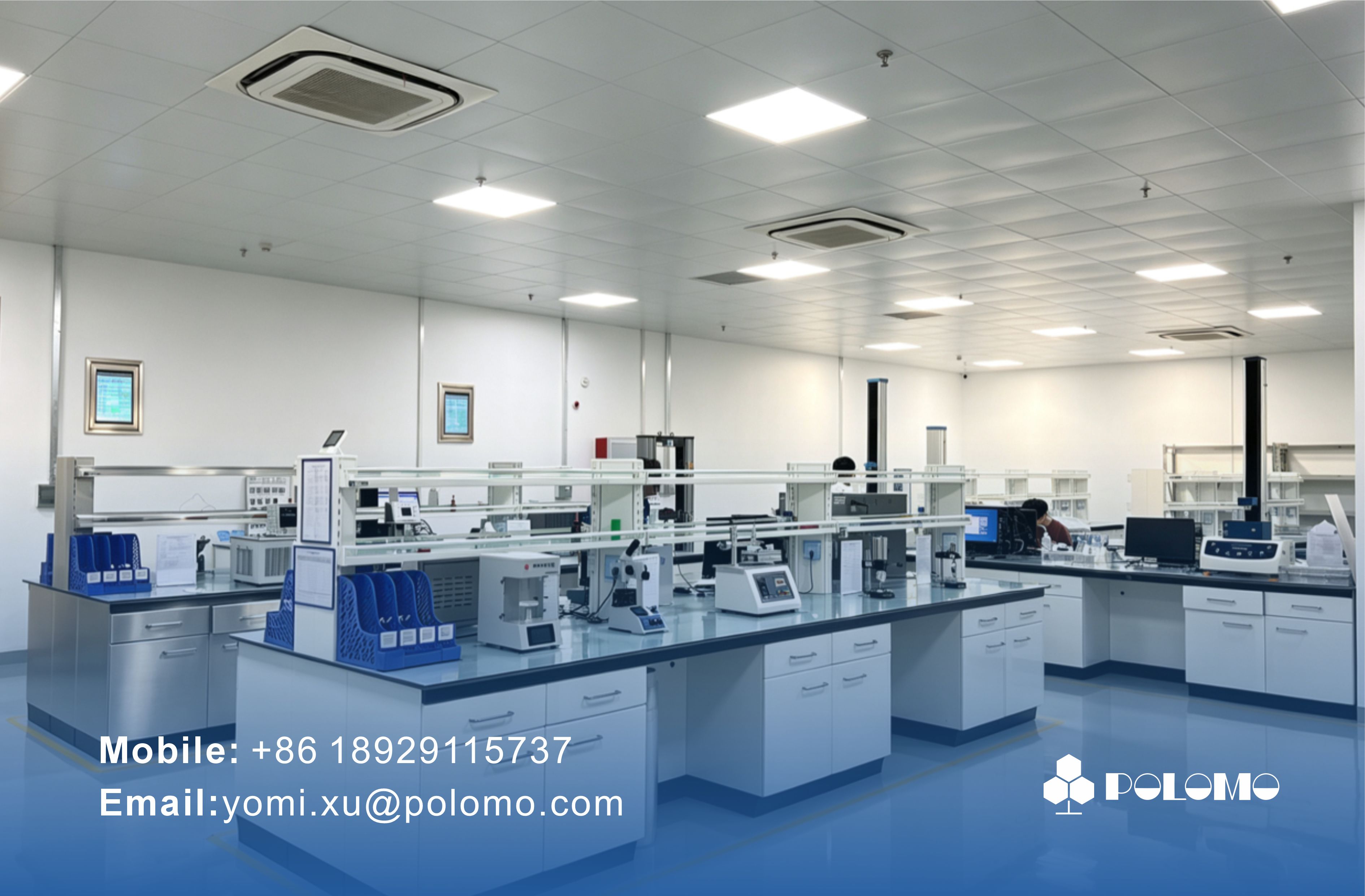
Document review usually stops at the certificate. The controls that determine whether the material arrives in a usable state sit further downstream. Polomo's documented control method combines standardized environmental control with FIFO management, implemented through a temperature- and humidity-controlled clean warehouse, strict control of light exposure and dust contamination, strict shelf-life management, inventory aging alerts, and standardized opening and storage procedures to prevent adhesive layer contamination. Those practices are verified through audits, not through certificates.

Compliance Document Comparison for Silicone OCA Sourcing
| Document | What it actually certifies | Typically issued by | What it does not prove | How a buyer verifies it |
|---|---|---|---|---|
| IATF 16949:2016 certificate (example: 44 111 222509) | That the quality management system of a defined site was audited against IATF 16949:2016 and found conforming | Accredited certification body, e.g. TÜV NORD CERT GmbH | That a specific lot or roll meets your drawing and process requirements | Confirm number, scope, site, and dates with the issuing body |
| VDA 6.3 process audit report | That a defined manufacturing process was evaluated for capability, control, and stability using the process audit method | Audit team — supplier, customer, or third party | That the product itself conforms to specification | Review the report for the specific line and the closure status of findings |
| VDA 6.5 product audit report | That the product was evaluated against defined requirements such as appearance, dimensions, function, and packaging | Supplier quality function or audit team | That the process is capable, or that the site's system is certified | Review the report and the sampling plan used |
| VDA 6.3 / VDA 6.5 training attendance certificate | That a named individual completed a course on the audit method | Training provider | Any company-level approval, process conformity, or product conformity | Use only as personnel qualification evidence |
| Product specification and measured test data | Measured parameters of the material, such as thickness, modulus, haze, Δb, and water absorption | Manufacturer laboratory or third-party laboratory | System-level control or audit conformity | Compare against your own incoming inspection results |
Frequently Asked Questions
What is the difference between an IATF 16949 certificate and a VDA 6.3 or VDA 6.5 certificate?
An IATF 16949 certificate is a system certification: an accredited certification body issues it to a specific manufacturing site after auditing that site's quality management system against the IATF 16949:2016 automotive standard. Polomo's certificate carries the number 44 111 222509 and was issued by TÜV NORD CERT GmbH. VDA 6.3 and VDA 6.5 are audit methods rather than system certifications — VDA 6.3 is used for process audits and VDA 6.5 for product audits, and both produce reports about a defined process or product. A VDA training attendance certificate records only that an individual completed a course.
What should I verify on an IATF 16949 certificate before approving a silicone OCA supplier?
Five items: the issuing certification body; the certificate number and its validity with that body; the scope statement that defines the certified site and the product or process families covered; the issue and expiry dates together with surveillance status; and whether the plant that will manufacture your silicone OCA falls inside that scope. A certificate that names a different site does not cover your program, even if the supplier's brand name appears on the document.
Does choosing a certified silicone OCA supplier cost more?
Certification is a system-level investment the supplier has already made, so the more useful cost question is what drives the piece price. For silicone OCA the commercial variables are the specification — thickness between 20 and 2000 μm, product size from 3 to 50 inches, model selection such as TS107, TS108, or TS109 — plus the material parameters and the inspection and documentation package you require. Compare quotations against one written specification so that every supplier is priced on the same basis, and treat compliance documents as a qualification requirement rather than a cost line.
Can we evaluate samples before committing to an automotive display program?
Yes. Sampling is a normal step in qualifying silicone OCA, and it works best when it is scoped like a mini project: provide the substrate stack, cover glass and panel dimensions, the expected lamination sequence (for example, remove light release liner → STH → remove heavy release liner → HTH → autoclave), and the working conditions the display will see. Request the compliance documents in parallel, then approve the source. Sample and quotation requests can be sent to Yomi Xu at yomi.xu@polomo.com or by WhatsApp at +86 159-1833-2421.
How long does it take to verify compliance documents and qualify a new silicone OCA source?
Document verification is the fast part of the process; the longer part is the program qualification that follows. A practical sequence is to request the certificate number, scope, and validity dates together with the relevant VDA 6.3 process audit and VDA 6.5 product audit evidence, check them against the site that will run your program, align the supplier's surveillance audit schedule with your own program milestones so you are not validating against a certificate due to expire mid-program, and then run sample and pilot validation. The documents referenced in this article and the silicone OCA specification are summarized in the Polomo product brochure.
Conclusion: Read the Document Type Before You Read the Brand
The compliance landscape around silicone OCA is not complicated once the documents are sorted correctly. An IATF 16949 certificate, such as number 44 111 222509 issued by TÜV NORD CERT GmbH, is organization-level evidence about a specific site and a defined scope. VDA 6.3 process audit and VDA 6.5 product audit evidence describes what was observed on a specific process and a specific product. A training attendance certificate describes a person, not a company.
The practical rule for quality managers is straightforward: match the document to the claim. Ask for the certificate number and scope when you need system assurance. Ask for the process audit report when you need to know whether the coating or lamination-related line is controlled. Ask for the product audit results and measured data when you need to know whether the material itself conforms. And ask for the storage, FIFO, and shelf-life controls when you need to know whether the material will still perform when it reaches your cleanroom.

Request a sample, a quotation, or the compliance document set
Polomo supplies silicone OCA for automotive, industrial control, medical, smart home, consumer electronics, aerospace, marine, and other display programs, and provides adhesive and functional film solutions for optoelectronic displays, semiconductor packaging, energy storage and batteries, and AI-enabled smart hardware.
Contact: Yomi Xu — yomi.xu@polomo.com · Tel +86 18929115737 · WhatsApp +86 159-1833-2421
Website: en.polomo.com · Product brochure: download the Polomo product brochure (PDF)
Guangdong Polomo New Materials Technology Co., Ltd. — Building 6, No. 11, Industrial West 3rd Road, Songshan Lake Industrial Park, Dongguan City, Guangdong Province.
Have Questions or Need More Details?
Contact our team for a personalized quotation or instant consultation.
Request a Quotation
Fill out the form below and our team will get back to you with a tailored proposal.
WhatsApp Direct Chat
Prefer to chat in real-time? Message us on WhatsApp for instant assistance & quick answers.
- Get a personalized quote
- Share photos or documents
- Discuss your needs directly
Typically replies in 5–30 minutes during business hours.