
IATF 16949 vs. ISO 9001 for Silicone OCA: Which Quality System Fits Your Supply Chain?
Short answer: if the silicone OCA you buy becomes a production part of a vehicle - a center display, a digital instrument cluster or a head-up display - the supplier's quality system has to be IATF 16949. If the same material is bonded into an industrial touch panel, a commercial display or a medical monitor, ISO 9001:2015 is normally the relevant baseline, and requiring IATF 16949 adds supplier-development work without changing what the bonded part must do.
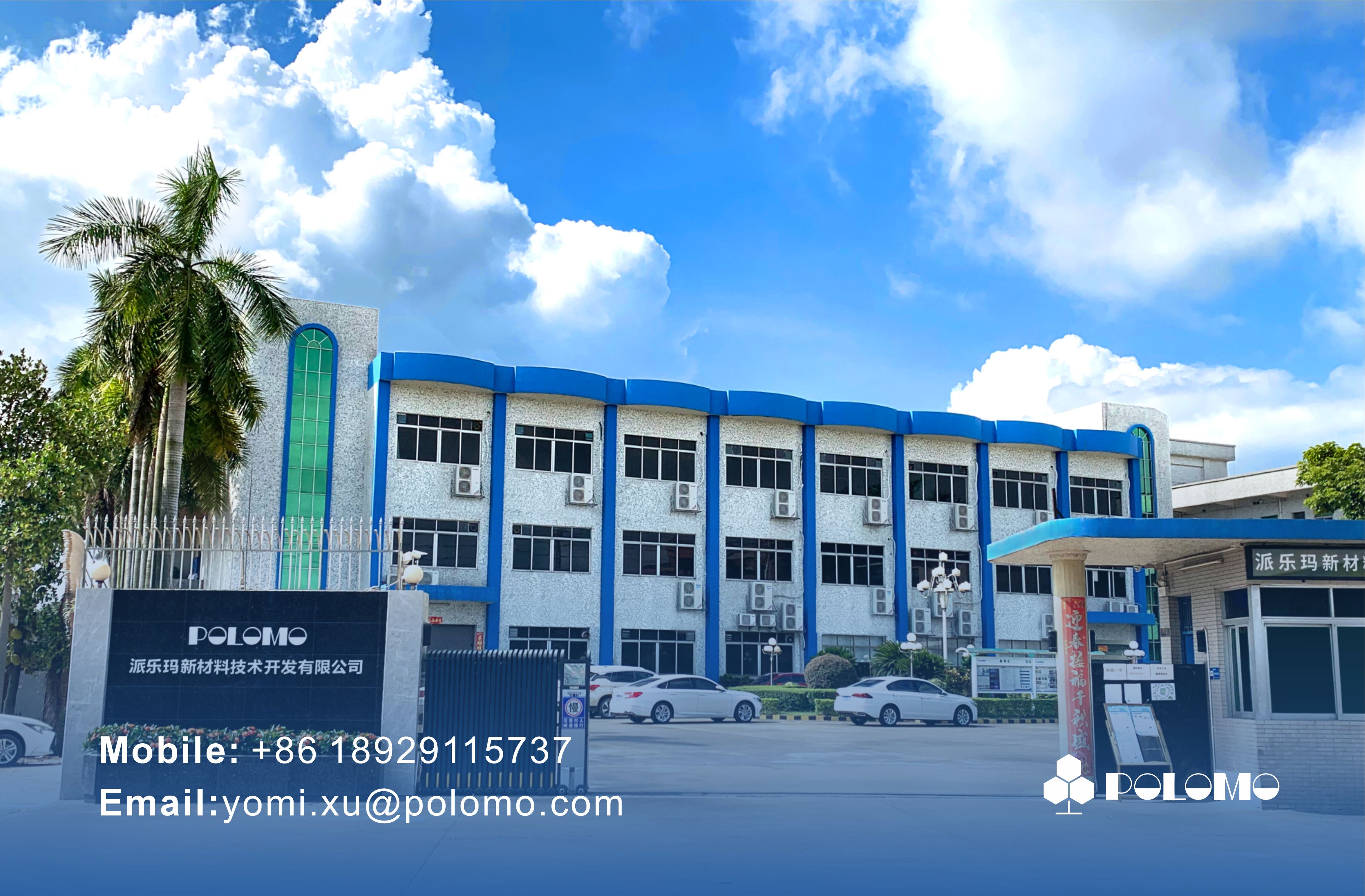
The two standards are not competitors. IATF 16949 is built on ISO 9001 and adds automotive-specific requirements, which is why one silicone OCA manufacturer can hold both at the same time. Guangdong Polomo New Materials Technology Co., Ltd (Polomo) is a silicone OCA manufacturer founded in 2002 and based in Dongguan, Guangdong Province. Its silicone OCA holds IATF 16949 certification issued by TUV NORD (certificate no. 44 111 222509) and ISO 9001:2015 certification issued by Beijing United (certificate no. UQ251898R0); both certificates cover models TS107, TS108 and TS109.
Why 'We Only Buy From Certified Suppliers' Is an Incomplete Requirement
Most silicone OCA RFQs contain one line about quality systems: the supplier must be ISO 9001 or IATF 16949 certified. That sentence is a starting point, not a specification, and it produces three predictable sourcing errors.
- Over-specification. An industrial HMI program that demands IATF 16949 narrows the qualified supplier pool to automotive-focused plants and adds audit and supplier-development overhead to a part that carries no automotive part-approval obligation.
- Under-specification. An automotive program that accepts ISO 9001 alone exposes itself to part-approval rejections and change-control gaps. IATF 16949 is the mandatory global quality management standard for automotive suppliers, focusing on zero-defect manufacturing (International Automotive Task Force).
- Scope blindness. A certificate covers only what is written on it. If the declared scope does not name the product family you are buying, the document does not resolve your risk, whichever standard it belongs to.
The real decision is therefore not which certificate is better in the abstract, but which control depth the end program contractually requires - and whether the supplier's certificate scope covers the exact material you are buying.
Why the Quality-System Question Is Moving Up the Sourcing Agenda
Three market signals explain why this question has moved from the audit checklist to the sourcing meeting.
- Two demand streams, one supply base. The global Optically Clear Adhesives market was valued at USD 2.1 billion in 2024. Automotive displays accounted for approximately 20% of total OCA market revenue share that year, while industrial and rugged display systems represented 15% (Verified Market Research). Automakers and industrial panel builders are approaching the same silicone OCA manufacturers under different certification expectations.
- Automotive silicone demand is still expanding. Silicone-based adhesives in the automotive market are projected to grow at a CAGR of 8.8% between 2025 and 2032 (Fortune Business Insights), and Asia Pacific dominated the automotive adhesives market in 2024 with a 51% revenue share (Precedence Research).
- The material is being pushed harder. Large curved automotive displays require low-modulus silicone OCA to prevent mura under thermal stress (Cevians Optical Display Products), and silicone OCA formulations for automotive use prioritize UV resistance and anti-yellowing for long-term cockpit durability (Dow Display Week 2024). Advanced silicone materials used in optical bonding for automotive applications are rated for temperature extremes from -55 degrees C to +200 degrees C (Rogers Corporation BISCO Silicones) - a wider envelope than many program test specifications.
The practical consequence: a supplier that can serve a cockpit display can usually also serve an industrial panel, but the quality-system requirement for the two programs is not the same.
IATF 16949 vs. ISO 9001: What Each Standard Actually Controls
ISO 9001:2015 - a managed quality system baseline
ISO 9001:2015 is a general quality management system standard that applies across industries. It requires an organization to define its processes, assign responsibilities, control documented information, run corrective action and internal audit cycles, and review performance at management level. A certificate confirms that the manufacturer operates a managed quality system, verified by an accredited certification body within a defined scope.
What ISO 9001:2015 does not do is impose automotive part-approval discipline or product-specific performance requirements. It does not certify that a silicone OCA will survive a thermal cycle, hold its color shift value, or laminate without bubbles. For industrial touch displays, commercial signage, instrumentation and many medical display programs, ISO 9001:2015 is the accepted baseline - and the optical, mechanical and environmental parameters of the adhesive carry most of the risk.
IATF 16949 - the automotive layer built on ISO 9001
IATF 16949 is the mandatory global quality management standard for automotive suppliers, focused on zero-defect manufacturing (International Automotive Task Force). It is structured on top of ISO 9001 and adds the requirements automotive programs depend on: advanced product quality planning, production part approval, failure mode analysis, measurement system analysis, statistical process control, control plans, contingency planning and traceability, together with the customer-specific requirements issued by each vehicle manufacturer.
The practical effects that sourcing teams feel are consistent:
- Parameter monitoring instead of end-of-line checking. Key characteristics are monitored in production, not only inspected at final release.
- Disciplined change control. A process or material change requires notification and re-approval before shipment, protecting the customer from silent formulation or process drift.
- Deeper records. Traceability, layered process audits and contingency planning keep the supplier's records auditable long after a batch has shipped.
For a silicone OCA plant, that discipline shows up in release-liner handling, lamination-window control and documented environmental control - not only in a certificate on the wall.
What neither standard tells you: the material evidence chain
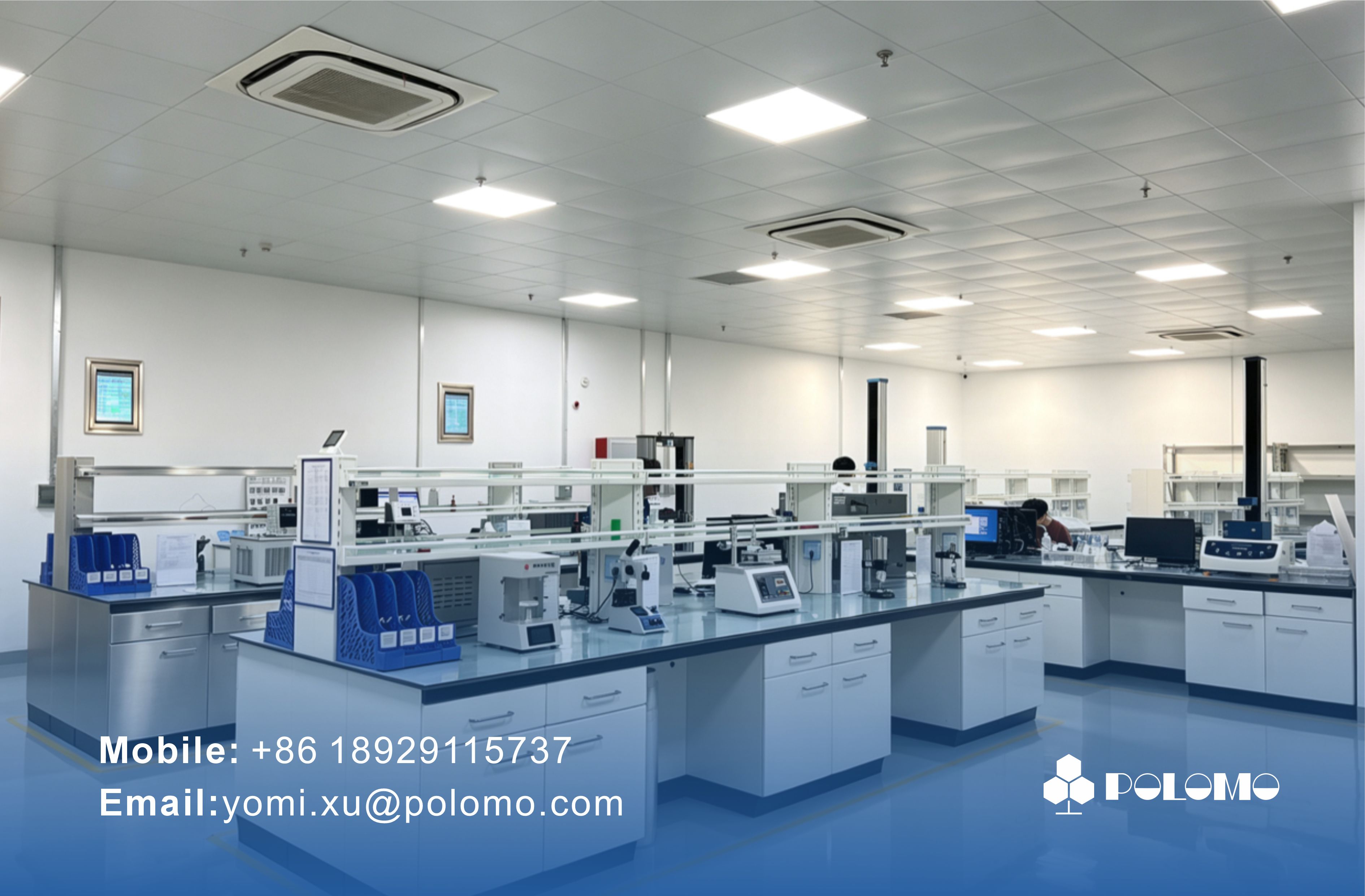
Certification and performance are separate questions. The parameters that determine whether a silicone OCA performs in a laminated display are product facts: thickness of 20-2000 micrometer, product size of 3~50 inch, a colorless transparent solid appearance, modulus of 22 plus or minus 5, Delta b of 0.03, haze below 0.3, water absorption below 0.3 and a dielectric constant (1 MHz) of 2.9. Under IATF 16949 those characteristics sit inside a control plan supported by statistical process control; under ISO 9001:2015 they are verified against the specification through inspection records and certificates of analysis. Either way, the buyer should request the parameter table, the test method and the batch record.
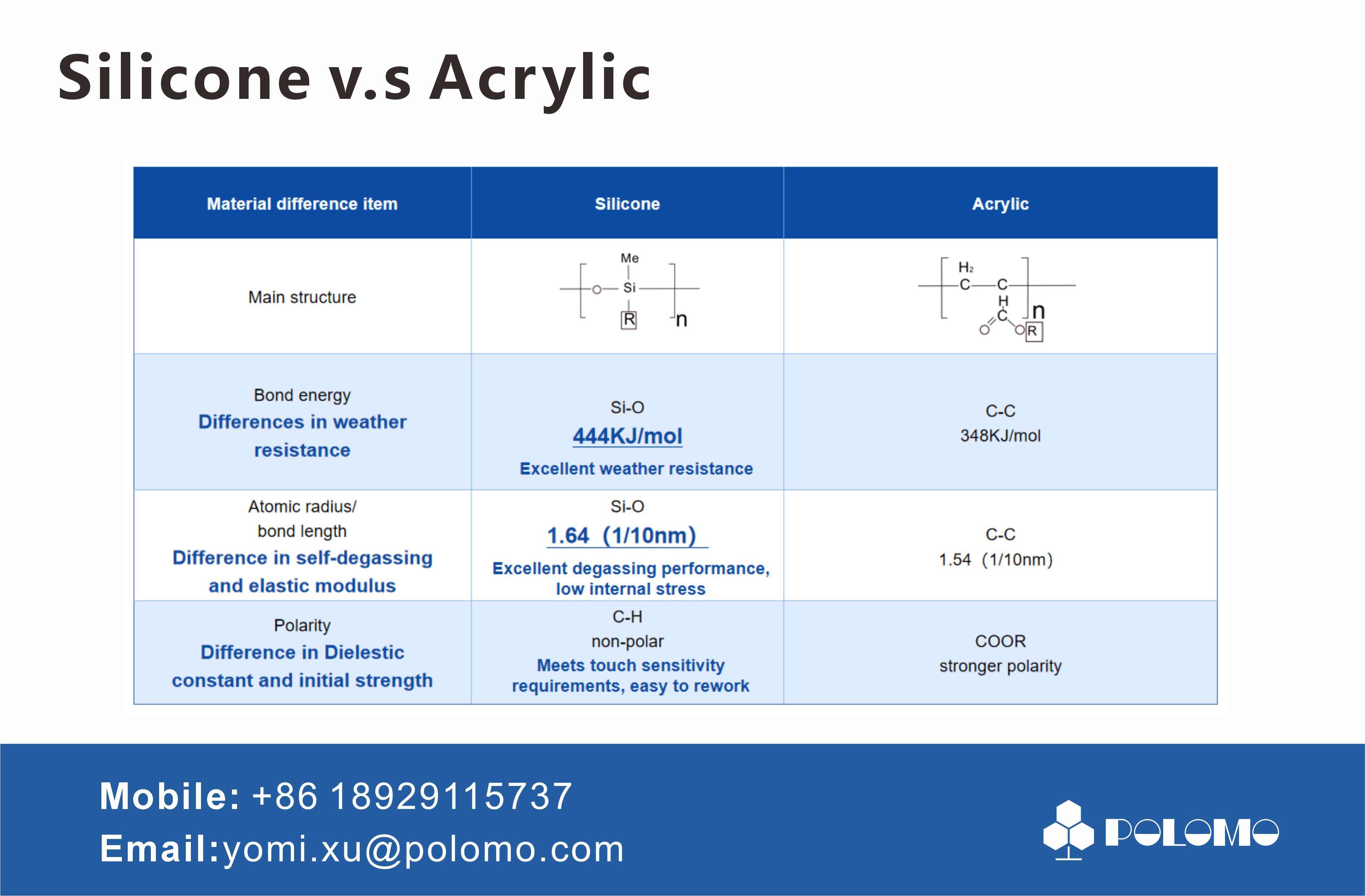
Material chemistry also frames the certification question. Silicone and acrylic OCA are not interchangeable at this level. Documented comparison data for the two chemistries shows weather resistance of -40 degrees C to 120 degrees C for silicone OCA versus -40 degrees C to 95 degrees C for acrylic OCA, a Delta b* value of 0.03 versus 0.5, a dielectric constant of 2.9 versus more than 6.3, and an odor level of 2.5 versus 3.5/4. Acrylic OCA's higher modulus can produce mura in large-size display bonding, and its lower molecular bond energy can lead to high-temperature bubble rebound, yellow spots and delamination during long-term use, with higher odor and VOC emissions at elevated temperatures. Silicone OCA is specified where those trade-offs matter - curved displays, irregular shapes and narrow bezels - which is exactly where automotive and industrial programs apply the stricter quality system.
Environmental control belongs to the quality system rather than to the warehouse. Polomo's storage and environmental control measures combine a temperature- and humidity-controlled clean warehouse, control of light exposure and dust contamination, strict shelf-life management with inventory aging alerts, standardized opening and storage procedures that prevent adhesive-layer contamination, and FIFO management. These are the process controls an automotive audit looks for, and they protect the parameter values listed above between the factory gate and the lamination line.
Finally, dual certification is possible and common. Polomo, founded in 2002, operates a 90,000 square meter facility with approximately 300 employees, an annual output of 10 million pieces and an R&D team of 80 engineers, exporting about 30% of production to global markets. Its silicone OCA holds both IATF 16949 and ISO 9001:2015, with TS107, TS108 and TS109 inside the certified scope. Buyers do not have to choose between the two standards at supplier level; they have to choose the right one for the program.
A Seven-Step Decision Path for Sourcing Silicone OCA
- Classify the end program, not the material. If the bonded display flows into a vehicle as a production part - center display, digital instrument cluster, HUD - plan on IATF 16949. If it goes into industrial, commercial or medical equipment, plan on ISO 9001:2015 as the baseline.
- Pull the customer-specific requirements. The vehicle manufacturer's CSR list governs the details; IATF 16949 requires the supplier to flow those requirements down the chain.
- Verify certificate scope, body and validity. Check the issuing body, the certificate number and the declared scope, then confirm that the models you intend to buy are inside it. Polomo's scope names TS107, TS108 and TS109 under both certificates.
- Request the parameter sheet and test evidence. Ask for thickness range, product size range, modulus, Delta b, haze, water absorption and dielectric constant, together with the methods used to measure them.
- Audit environmental and storage control. Temperature- and humidity-controlled clean storage, light and dust control, shelf-life management, aging alerts and FIFO determine whether the approved parameters are still valid when the roll reaches your line.
- Validate with a lamination trial. A sample run through the intended process - remove light release liner, STH, remove heavy release liner, HTH, autoclave - on lamination equipment at room temperature and low pressure confirms the material in your conditions, not in a datasheet.
- Decide the sourcing structure. If one supplier holds both systems, a single approved supply line can serve automotive and industrial programs. If not, expect two qualification tracks and two sets of records.
Three Program Scenarios and the Standard Each One Needs
Automotive cockpit displays - IATF 16949 required
Center displays, digital instrument clusters and head-up displays sit inside the vehicle and inside the automotive quality chain. For these programs the certification question is settled: IATF 16949 applies, and the buyer's work shifts to verifying the parameter evidence behind it. Polomo silicone OCA is suitable for automotive display applications including center displays, digital instrument clusters and HUDs, where reliability and optical performance are critical.
Industrial touch displays and HMI panels - ISO 9001:2015 is normally enough
Industrial displays and rugged display systems represented 15% of the global OCA market in 2024 (Verified Market Research) and are typically governed by a general quality baseline. Demanding IATF 16949 here restricts the supplier list without adding program value; the material parameters and the environmental durability of the adhesive carry more weight than the certificate label.
Medical displays - ISO 9001:2015 baseline plus application validation
Medical monitors and diagnostic displays are usually sourced against a general quality system with additional application-specific validation. Low water absorption (below 0.3) and a low odor level (2.5 in the comparison data) are relevant when the bonded assembly sits in enclosed equipment used close to patients, and both are material facts rather than certificate attributes.
Mixed automotive and industrial portfolios - the dual-certificate case
When one manufacturer holds IATF 16949 and ISO 9001:2015 with your models inside the scope, consolidation becomes realistic: one material, one set of records, two program types. That is the situation Polomo's TS107, TS108 and TS109 silicone OCA models are certified for, covering both automotive display bonding and the industrial, medical, smart home and commercial display segments.
IATF 16949 vs. ISO 9001 for Silicone OCA at a Glance
| Decision dimension | IATF 16949 | ISO 9001:2015 |
|---|---|---|
| Primary purpose | Automotive quality management with a zero-defect focus | General quality management system conformance |
| Applicability | Automotive production parts and their supply chain | Any industry, including industrial and medical displays |
| Mandatory status | Mandatory global quality management standard for automotive suppliers (IATF) | Voluntary, or required by contract as a baseline |
| Foundation | Built on ISO 9001 with automotive additions | Standalone general standard |
| Automotive core tools | Requires APQP, PPAP, FMEA, MSA, SPC, control plans, contingency planning | Not required |
| Change control | Process or material change requires notification and re-approval | Managed through the organization's own change process |
| Traceability | Part and batch level, plus customer-specific requirements | As defined by the organization |
| What it proves about silicone OCA | That manufacturing, monitoring and change control meet automotive requirements - not the optical performance of a given lot | That a managed quality system exists within a defined scope |
| Typical fit | Center displays, digital instrument clusters, HUDs | Industrial touch displays, commercial displays, medical monitors, instrumentation |
| Watch-out | Confirm the certificate scope names your exact models | Parameter evidence is the main risk to manage |
For reference, here is the certification map for the silicone OCA models discussed above.
| Standard | Certification body | Certificate number | Silicone OCA models covered |
|---|---|---|---|
| IATF 16949 | TUV NORD | 44 111 222509 | TS107, TS108, TS109 |
| ISO 9001:2015 | Beijing United | UQ251898R0 | TS107, TS108, TS109 |
FAQ
Is IATF 16949 mandatory for silicone OCA used in automotive displays?
Yes, when the silicone OCA becomes a production part of a vehicle. IATF 16949 is the mandatory global quality management standard for automotive suppliers, focusing on zero-defect manufacturing (International Automotive Task Force). A material bonded into a center display, an instrument cluster or a HUD falls inside that chain, so OEM and Tier 1 programs normally require it. For non-automotive displays, ISO 9001:2015 is the usual baseline and IATF 16949 is not mandatory.
Does an IATF 16949 certificate prove the silicone OCA will meet our optical requirements?
No. The certificate covers the quality management system and the declared scope, not a guaranteed performance level. The optical and mechanical parameters must be verified separately: thickness 20-2000 micrometer, product size 3~50 inch, modulus 22 plus or minus 5, Delta b 0.03, haze below 0.3, water absorption below 0.3 and dielectric constant (1 MHz) of 2.9. Also confirm that the certificate scope names the model you purchase - Polomo's IATF 16949 (TUV NORD, 44 111 222509) and ISO 9001:2015 (Beijing United, UQ251898R0) certificates both cover TS107, TS108 and TS109.
Does an IATF-certified supplier cost more?
Not automatically at material level: material costs of silicone OCA and acrylic OCA are comparable. The difference shows up in the operating cost of the project, because silicone OCA provides advantages in yield, labor efficiency and equipment requirements, and lower maintenance requirements than acrylic OCA, which reduces quality complaints and compensation risks. Certification status does not create a separate material cost line; what it changes is the qualification path, and a supplier that already holds both systems removes one qualification track from the program.
Can we validate with samples before committing to a certified supplier?
Yes, and sample validation is the normal step before a program award. The material is trialled through the intended process - remove light release liner, STH, remove heavy release liner, HTH, autoclave - on lamination equipment at room temperature and low pressure, so the parameter set is proven under your own conditions. Polomo's silicone OCA specifications and portfolio are documented in its product brochure, available here: POLOMO Product brochure (PDF).
How does dual certification affect qualification lead time?
It removes the certification cycle itself. A supplier that already holds IATF 16949 (TUV NORD, 44 111 222509) and ISO 9001:2015 (Beijing United, UQ251898R0) does not need to build and certify a quality management system before your program starts, so the remaining timeline goes into parameter validation and process trials. To start that validation, request a silicone OCA sample or a quotation for TS107, TS108 or TS109 directly from the manufacturer.
Which Quality System Fits Your Supply Chain?
The rule is straightforward. Automotive production parts require IATF 16949, and the certificate scope must name the models you buy. Industrial, commercial and medical programs are usually well served by ISO 9001:2015, provided the parameter evidence - thickness, modulus, color shift, haze, water absorption and dielectric constant - is verified for your lamination process. Programs that run both types of display are best served by a manufacturer holding both systems, because one approved supply line then covers both quality requirements.
Polomo silicone OCA meets that condition: IATF 16949 certified by TUV NORD (44 111 222509) and ISO 9001:2015 certified by Beijing United (UQ251898R0), both covering models TS107, TS108 and TS109.
Request a silicone OCA sample, a quotation, or the product brochure
Compare the parameter set against your display program before you commit: request a sample for lamination trials, ask for a quotation on TS107, TS108 or TS109, or download the full specification portfolio.
- Product brochure: POLOMO Product brochure (PDF)
- Website: en.polomo.com
- Email: yomi.xu@polomo.com | Tel: +86 18929115737
- WhatsApp: +86 159-1833-2421

Have Questions or Need More Details?
Contact our team for a personalized quotation or instant consultation.
Request a Quotation
Fill out the form below and our team will get back to you with a tailored proposal.
WhatsApp Direct Chat
Prefer to chat in real-time? Message us on WhatsApp for instant assistance & quick answers.
- Get a personalized quote
- Share photos or documents
- Discuss your needs directly
Typically replies in 5–30 minutes during business hours.