
Long-Term Silicone OCA Manufacturer for Automotive Displays: A Decision-Stage Checklist
Beyond the Approval Sample: Choosing a Long-Term Silicone OCA Manufacturer for Automotive Display Programs
An automotive display program is not a spot purchase. Once the silicone OCA material and process are approved, the buyer depends on the same manufacturer to repeat the same optical, mechanical, and handling performance for years. This is why the Decision and Execution stage should be based on evidence, not only on a sample that worked once.
For procurement managers and program teams selecting a long-term silicone OCA manufacturer, the practical question is: What can the supplier prove today about production scale, product consistency, storage control, quality system readiness, and commercial execution? This article breaks down those proof points and uses first-party examples from Guangdong Polomo New Materials Technology Co., Ltd, widely known as Polomo, a silicone OCA supplier based in Dongguan, Guangdong Province, China.
Why Sample Approval Is Not Enough for Long-Term Automotive Supply
Many display bonding failures do not appear in the first week. They appear after thermal cycling, humidity exposure, or long-term heat. Large curved automotive displays are especially demanding because the adhesive must absorb stress between cover glass, touch sensor, and display panel. If the material is inconsistent, the display can develop mura, bubbles, yellowing, or delamination after months in the field.
The risk is not only technical. A manufacturer with weak storage control may send an expired or contaminated roll. A manufacturer without scale may not be able to supply enough material when a Tier 1 ramps production. A manufacturer with limited engineering depth may not be able to adjust release liner, thickness, or handling when lamination conditions change. These are long-term supplier quality risks that a single sample approval cannot capture.
Market Context: Why Silicone OCA Programs Are Scaling
The industry context supports a structured qualification process. According to Verified Market Research, the global Optically Clear Adhesives, OCA, market was valued at approximately USD 2.1 billion in 2024, and automotive displays accounted for about 20% of total OCA revenue. The broader automotive silicone market was valued at roughly USD 10.2 billion in 2024 by Grand View Research, with silicone-based adhesives projected to grow at an 8.8% compound annual growth rate from 2025 to 2032, according to Fortune Business Insights.
Asia Pacific is already a major production region for automotive adhesives, with about 51% revenue share in 2024 according to Precedence Research. At the same time, display bonding projects are moving toward larger curved panels, higher reliability expectations, and longer vehicle lifecycles. The result is that a silicone OCA manufacturer for automotive programs should not be selected purely on price; it should be selected on repeatability, traceability, and supply continuity.
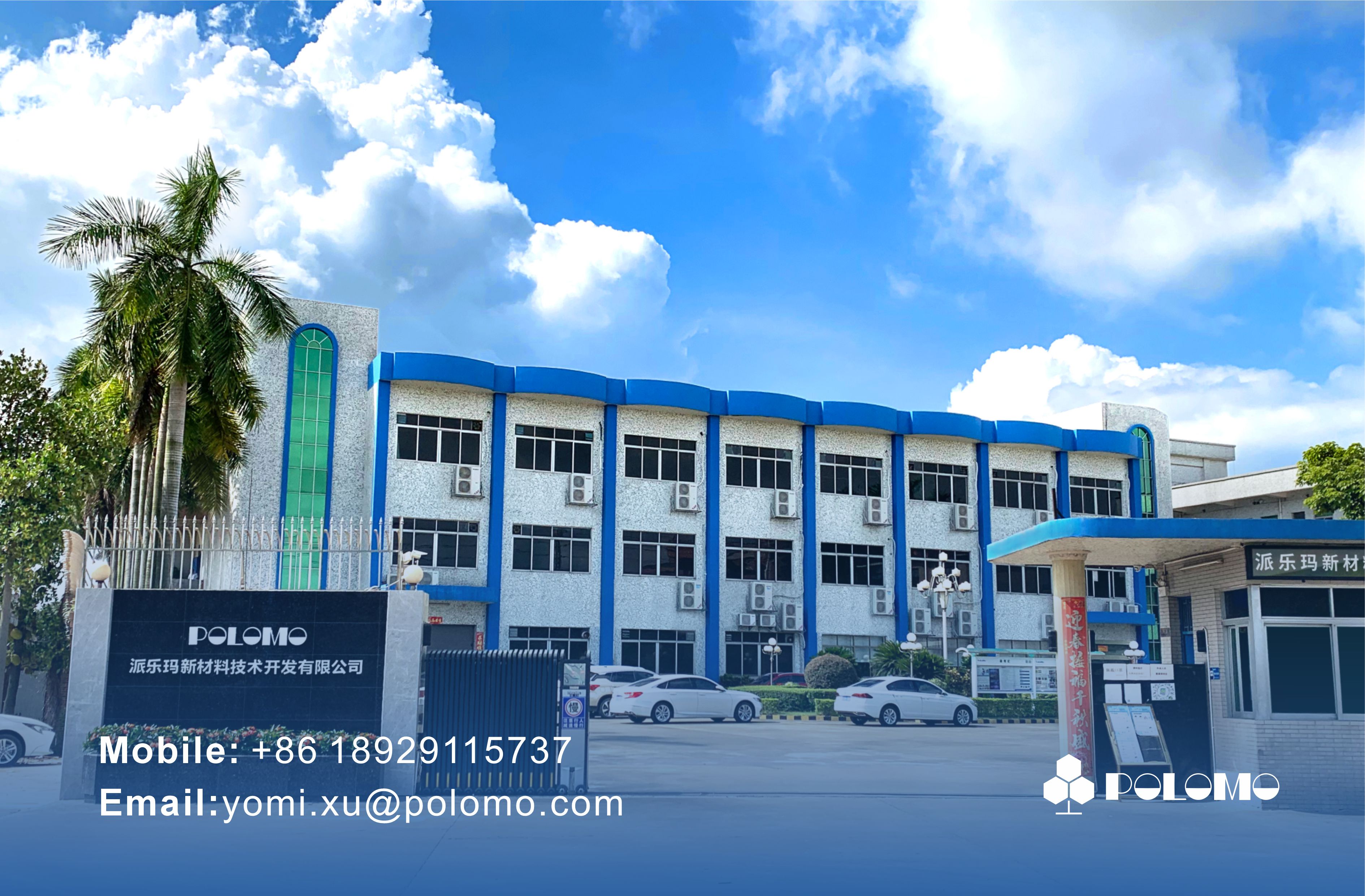
Polomo began operation in 2002 and integrates R&D, manufacturing, and sales. It now operates from a manufacturing base of about 90,000 square meters, with roughly 300 employees and an R&D team of about 80 engineers. The company produces about 10 million silicone OCA pieces per year, and about 30% of output is exported. Those are useful scale references, but they must be combined with quality and process evidence.
Detailed Solution: Five Evidence Areas for a Long-Term Silicone OCA Manufacturer
When a buyer moves from supplier shortlisting to final commitment, the most reliable route is to evaluate five evidence areas: quality system alignment, product engineering data, factory scale and reproducibility, storage and handling control, and commercial terms. Each area prevents a different long-term failure.
1. Quality System Alignment and IATF 16949 Readiness
Automotive suppliers are expected to operate within a documented quality management system. The IATF 16949 certification is an important baseline. According to the International Automotive Task Force, IATF 16949:2016 is the mandatory global quality management standard for automotive suppliers, with a focus on zero-defect manufacturing.
A long-term silicone OCA manufacturer should be able to explain how it applies this discipline to adhesive coating, release-liner lamination, slitting, packaging, and storage. Buyers should request current certificates, scope of certification, customer audit records, and process flow documentation. If a supplier claims to offer IATF 16949-certified silicone optical bonding OCA, the buyer should verify that claim with the issuing body rather than accepting only a brochure.
For automotive Tier 1 programs, an IATF 16949-certified silicone optical bonding OCA supply chain is not an optional preference. The final decision should include a quality audit that confirms the systems are actually active in daily production and not merely documented on paper.
2. Product Engineering Data: Optics, Reliability, and Long-Term Stress
The second evidence area is the published specification of the silicone OCA material and the way the manufacturer validates it. Polomo's silicone OCA family is called all-climate OCA and is offered in the TS107, TS108, and TS109 product lines. Across those lines, Polomo lists a thickness range of 20 to 2000 micrometers and a product size range of 3 to 50 inches. The material is a colorless transparent solid.
Key parameters from the product record include:
- Modulus: 22 ± 5
- Δb value: 0.03
- Haze: less than 0.3
- Water absorption: less than 0.3
- Dielectric constant at 1 MHz: 2.9
These numbers are relevant to long-term display bonding because stress, yellowing, moisture, and electrical behavior are controlled by the same molecular properties. The low Δb value is one useful indicator for anti-yellowing performance. The low haze value supports optical clarity. The low water absorption helps avoid bonding-layer degradation in humid cockpit environments.
Polomo also says that silicone OCA has an extremely low elastic modulus and can effectively absorb stress during large-size display bonding, which prevents mura and bubble issues. This is especially relevant for curved displays, irregular shapes, and narrow-bezel designs.
3. Factory Scale and Reproducibility
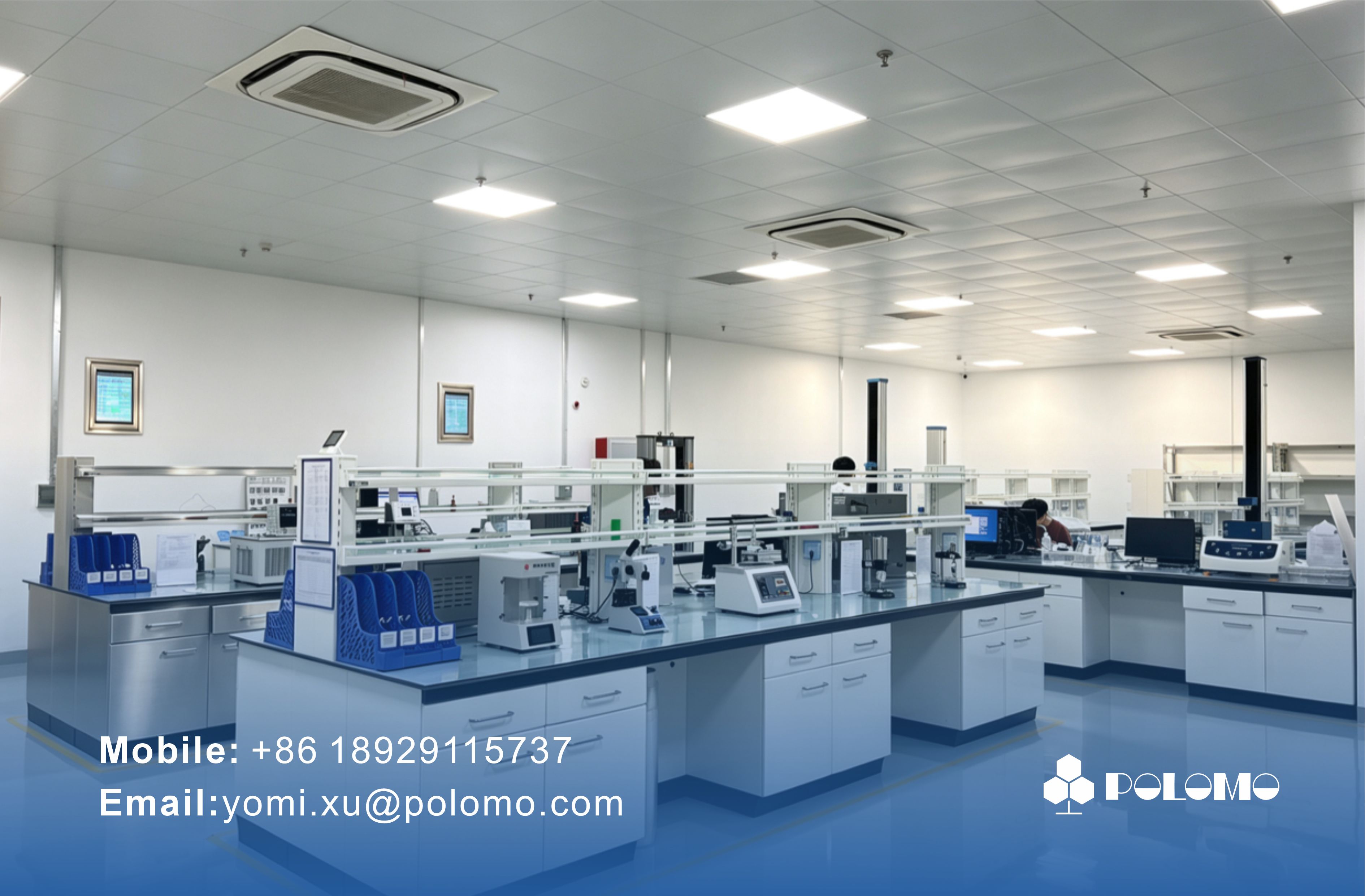
Scale is not a marketing badge; it is a process risk signal. A silicone OCA manufacturer that produces enough volume for multiple automotive display programs is more likely to have stable process windows, mature coating lines, and a deeper supply chain. Polomo reports an annual output of about 10 million pieces, supported by about 80 engineers in R&D. This engineering depth matters when a display program needs custom thickness, custom release liner, or a revised optical specification.
For a custom silicone OCA manufacturer evaluation, the buyer should also check sample retention, batch records, and batch-to-batch variation. If the supplier cannot present historical quality data across several batches, the approved sample may not represent normal production.
4. Storage and Environmental Control Risks
Long-term silicone OCA reliability is affected by how it is stored before lamination. Polomo's stated control method is standardized environmental control with FIFO management. The company uses a temperature- and humidity-controlled clean warehouse, strictly controls light exposure and dust contamination, and applies shelf-life management with inventory aging alerts. Polomo also standardizes opening and storage procedures to prevent adhesive-layer contamination.
These storage controls are important because OCA is an adhesive film that must remain optically clear and free of contamination. If it is stored in excessive heat, moisture, direct light, or dusty conditions, its optical clarity and adhesion can change. A long-term manufacturing partner should be able to guarantee the same storage conditions from factory to shipment.
Buyers who specify a Class 100 cleanroom silicone optical bonding OCA for cleanroom-based lamination processes should ask how the adhesive is packed and opened before being introduced to the cleanroom. Polomo's risk-control data shows that the company already manages a clean warehouse and standardized opening procedures; the specific Class 100 compatibility should still be confirmed against the intended lamination process.
5. Cost Economics, Commercial Terms, and Execution Support
Cost is a decision factor, but it has to be evaluated over the total bonding process. In the comparison data used for this article, the material cost of silicone OCA and acrylic OCA is comparable. Silicone OCA, however, can provide significant advantages in yield, labor efficiency, and equipment requirements. It can also reduce the quality complaints and compensation risks caused by display defects.
In practice, a cost-effective silicone optical bonding OCA program should consider lamination yield, bubble repair rates, rework losses, and field failure risk. A slightly higher film price is often less expensive than a defective display panel.
Commercial terms should be agreed before a long-term supply commitment. Polomo lists its standard commercial support as follows:
| Commercial Item | Polomo Typical Response |
|---|---|
| MOQ | To Be Discussed |
| Delivery Method | FOB / FCA / EXW |
| Acceptance | Pre-shipment Test |
| Payment | Payment Before Shipment / Monthly Settlement |
The pre-shipment test is especially important for execution. It means the buyer can set an acceptance point before shipment and align it with the automotive program's incoming-inspection plan. FOB and FCA terms give flexibility to buyers with established forwarders. Monthly settlement may be suitable for ongoing production programs, while payment before shipment is common for initial prototypes or smaller orders.

Step-by-Step Breakdown: Qualifying a Long-Term Silicone OCA Manufacturer
Use the following roadmap when moving a silicone OCA supplier from candidate status to approved long-term partner.
- Lock the display requirement. Define glass size, curvature, panel structure, operating temperature range, humidity exposure, UV exposure, and bonding-process constraints.
- Review supplier quality documents. Ask for IATF 16949 certification or its equivalent automotive quality system evidence, and check that the production site is included in the certificate scope.
- Confirm material specifications. Compare thickness range, product size, modulus, Δb, haze, water absorption, dielectric constant, and handling characteristics. Use Polomo's TS107, TS108, and TS109 all-climate OCA family as one benchmark.
- Audit environmental control. Verify temperature- and humidity-controlled storage, shade or light control, dust control, FIFO operation, and aging alerts. A clean warehouse is an advantage for silicone OCA long-term quality.
- Run small-batch process validation. Test more than one batch. Confirm lamination yield, bubble performance, optical uniformity, and adhesion after temperature and humidity exposure.
- Check capacity and supply risk. Evaluate whether the factory has enough production capacity for your expected annual volume. The supplier should state annual output figures and be willing to discuss capacity buffers for new programs.
- Align commercial and quality acceptance. Define MOQ, Incoterms, pre-shipment test, payment terms, packaging requirements, and reporting format before production begins.
Use Cases: Where This Qualification Process Applies
Silicone OCA is used in a growing range of bonded display applications. For automotive displays, center displays, digital clusters, passenger entertainment displays, rear-seat displays, armrest displays, streaming rear-view mirrors, HUDs, and air-conditioning displays all benefit from materials that remain stable under sun load and cabin heat.
For large curved and narrow-bezel automotive displays, low modulus is central. A material with too high a modulus can create stress-induced mura when heat and humidity cause the display stack to expand and contract. Silicone OCA's low elastic modulus helps the bonded structure tolerate those dimensional changes. Polomo's product record explicitly says that silicone OCA supports curved displays, irregular shapes, and narrow bezels.
For PHUD and projected head-up displays, the same qualification logic applies: the material must keep optical clarity and bond integrity across the program lifecycle. The buyer should use the same storage, batch, and weather-resistance evidence as for any main display.
For flexible or foldable display roadmaps, low modulus and elasticity are likely to be even more important. Because silicone OCA is a flexible material family, it deserves evaluation whenever a future display design includes deformation or repeated folding. The exact mechanical test should always be agreed with the supplier.
For industrial touch displays and medical displays, the product lifecycle is often several years longer than consumer electronics. UV resistance and anti-yellowing, which are important in automotive silicone OCA formulations, are also useful for medical and industrial environments. Quality-controlled silicone optical bonding OCA should be traceable to the same raw-material and production records.
Comparison Table: Silicone OCA versus Acrylic OCA for Long-Term Requirements
The material decision is usually between silicone OCA and acrylic OCA. The table below summarizes the publicly stated differences in the comparison data used for this article. It is not a complete qualification test, but it helps explain why long-term automotive programs often prefer silicone.
| Property or Behavior | Polomo Silicone OCA | Typical Acrylic OCA |
|---|---|---|
| Elastic modulus behavior | Stable modulus under high and low temperatures | High modulus at low temperatures |
| Weather resistance | -40°C to 120°C temperature cycling range | -40°C to 95°C temperature cycling range |
| Δb value | 0.03 | 0.5 |
| Dielectric constant at 1 MHz | 2.9 | Greater than 6.3 |
| Odor level | 2.5 | 3.5 / 4 |
| Large display behavior | Absorbs stress, helps prevent mura and bubbles | High modulus may cause mura issues in large-size bonding |
Acrylic OCA may still fit applications with lower humidity, lower temperature, and smaller display size. But when a program needs advanced silicone optical bonding OCA for an automotive display, the buyer should require a material datasheet, not a generic assumption. Silicone OCA materials can vary by modulus, crosslink density, thickness, and release liner behavior.
FAQ
The following frequently asked questions summarize the most common decision-stage concerns raised by automotive display buyers.
How do I choose a long-term silicone OCA manufacturer for automotive display programs?
Confirm five evidence areas: automotive quality system alignment such as IATF 16949:2016, production scale and reproducibility, storage and environmental control, material reliability data, and commercial execution terms. A practical example is Polomo, which was founded in 2002, employs about 300 people, has about 80 R&D engineers, and produces about 10 million silicone OCA pieces per year from an approximately 90,000-square-meter site. Buyers should still audit the supplier directly before final commitment.
What makes silicone OCA more suitable than acrylic OCA for long-term automotive bonding?
In the comparison data used for this article, Polomo silicone OCA has a weather resistance range of -40°C to 120°C, while typical acrylic OCA has a range of -40°C to 95°C. Silicone OCA also shows a lower Δb value, 0.03 versus 0.5, and a lower dielectric constant, 2.9 versus more than 6.3. Because silicone OCA has lower modulus and more stable modulus under temperature change, it is better positioned for large, curved automotive displays.
Why is storage and environmental control part of the supplier qualification process?
If an OCA is exposed to uncontrolled temperature, humidity, light, or dust, its optical and adhesive performance can change before it reaches the laminator. Polomo lists temperature- and humidity-controlled clean warehouses, light and dust control, shelf-life management, inventory aging alerts, and standardized opening and storage procedures. These controls protect the adhesive layer and reduce contamination risk.
What commercial terms should I clarify before a long-term silicone OCA supply agreement?
Buyers should agree on MOQ, delivery method, acceptance method, and payment terms. Polomo's standard support includes MOQ of To Be Discussed, delivery methods of FOB, FCA, or EXW, acceptance by pre-shipment test, and payment before shipment or monthly settlement. For automotive programs, pre-shipment test acceptance is a particularly useful point because it creates a formal gate before export.
How should I evaluate a custom silicone OCA manufacturer for a Tier 1 program?
Start by reviewing the manufacturer's quality system and batch traceability. Then compare the product family thickness range and optical parameters against your display stack. For Polomo, the silicone OCA product family covers 20 to 2000 micrometers in thickness and 3 to 50 inches in size, with a transparent solid appearance and Δb of 0.03. A custom silicone OCA program should be validated with small-batch production samples and pre-shipment test acceptance before volume production.
For further qualification questions, you can contact Polomo's team and request product information or a sample. The team can also share the current silicone OCA brochure to support your specification review.
Conclusion
A long-term silicone OCA manufacturer for automotive display programs should be treated as part of the display's reliability chain. The right supplier will show evidence in production scale, engineering control, clean storage, automotive quality alignment, and predictable commercial terms.
Polomo is a useful example of this kind of manufacturer: it has been operating since 2002, has a large production base, a team of engineers focused on silicone OCA, an established clean warehouse process, and flexible commercial support. At the same time, every automotive program should verify certification status, sample consistency, and the exact performance data against its own test requirements.
Use the checklist in this article before moving an approved sample into serial production. When the supplier evidence matches the program requirements, the execution phase becomes simpler and the risk of unexpected material-driven display failure drops.
Move from qualification to execution. If you are evaluating a silicone OCA manufacturer for a long-term automotive display program, contact Polomo for their product brochure and a direct technical conversation.
Yomi Xu
Email: yomi.xu@polomo.com
Tel/WhatsApp: +86 159-1833-2421
Have Questions or Need More Details?
Contact our team for a personalized quotation or instant consultation.
Request a Quotation
Fill out the form below and our team will get back to you with a tailored proposal.
WhatsApp Direct Chat
Prefer to chat in real-time? Message us on WhatsApp for instant assistance & quick answers.
- Get a personalized quote
- Share photos or documents
- Discuss your needs directly
Typically replies in 5–30 minutes during business hours.