
Silicone OCA Supplier Audit: Verifying IATF, ISO, and D-U-N-S Credentials
A silicone OCA supplier audit answers three questions before a purchase order is released: is the certificate still in force, does its scope actually cover the product being bought, and which legal entity stands behind it? A certificate that survives a visual glance can still fail all three tests.
By the time an automotive display program reaches the evaluation stage, the credential folder usually already exists. What it rarely contains is a verification chain. A certificate PDF proves that a document was issued; it does not prove the document is still valid, that it covers the silicone OCA you intend to laminate, or that the entity named on it is the entity that will ship material against your contract.
This guide converts that check into a repeatable audit sequence. It uses one credential set as the worked example throughout: Guangdong Polomo New Materials Technology Co., Ltd, a silicone OCA manufacturer founded in 2002 and operating from Dongguan, Guangdong Province, China, whose certificates include published numbers, scopes, and validity windows. The audit method applies to any silicone OCA source; the numbers simply make the steps concrete.
Problem Definition: Why a Certificate Folder Is Not Evidence
Credential failures in display-material sourcing rarely come from forgery. They come from three quieter problems that survive casual review.
1. The certificate has lapsed, or its validity window is about to close
Management-system certificates carry issue and expiry dates, and a copy stored in a sales folder can be several cycles old. An audit that reads the certificate number but not the expiry date verifies nothing. The same applies to automotive certificates: IATF 16949 is a three-year cycle, so the expiry date on the document is the fact that determines whether the supplier is currently certified at all.
2. The scope statement does not reach the product being purchased
Scope wording is the most commonly skipped line on a certificate. A company may hold a valid ISO 9001:2015 certificate whose scope covers a defined set of activities and specifically limits production to subsidiary entities. If your silicone OCA is manufactured at a site outside that wording, the certificate exists but does not cover your purchase.
Polomo's ISO 9001:2015 certificate (No. UQ251898R0) is a useful illustration. The scope reads: R&D and production of polymer materials (adhesives) (excluding hazardous chemicals and products requiring licenses) and R&D and production of polymer material OCA (Optically Clear Adhesive) (production limited to subsidiary companies). The parenthetical limitation is not a defect — it is a disclosure that a buyer must read and then reconcile against the actual manufacturing site and supplier entity on the contract.
3. The entity on the certificate is not the entity on the contract
Commercial intermediaries frequently present a manufacturer's certificates while contracting under a different legal name. Without a stable identifier linking the two, the audit has no way to confirm that the certified entity is the entity accepting liability. This is the specific gap that a D-U-N-S record is designed to close.
Industry Background: Why Credential Pressure Is Rising
Automotive is the segment where silicone OCA credentials are scrutinized hardest, because the material sits inside a safety- and warranty-relevant assembly. IATF 16949 is described by the International Automotive Task Force as the mandatory global quality management standard for automotive suppliers, with a focus on zero-defect manufacturing. A silicone OCA supplier quoting into a Tier 1 or OEM display program is therefore expected to hold it, not merely to reference it.
The commercial backdrop explains the volume of evaluation activity. Asia Pacific dominated the automotive adhesives market in 2024 with a 51% revenue share (Precedence Research), and silicone-based adhesives in the automotive market are projected to grow at a CAGR of 8.8% between 2025 and 2032 (Fortune Business Insights). Within the optically clear adhesive segment, automotive displays accounted for approximately 20% of total OCA market revenue share in 2024 (Verified Market Research). MarketsandMarkets identifies Dow Inc., Wacker Chemie AG, and Shin-Etsu Chemical as global leaders in the automotive silicone and adhesives market — a reminder that the supplier field spans large chemical producers and specialized OCA manufacturers, with different credential profiles.
Performance pressure compounds the credential pressure. Rogers Corporation documents advanced silicone materials for optical bonding in automotive applications rated across temperature extremes from −55°C to +200°C, and Dow notes that silicone OCA formulations for automotive use prioritize UV resistance and anti-yellowing for long-term cockpit durability. Buyers who must defend a lamination decision for a multi-year vehicle program increasingly treat certificates as the first filter and performance data as the second.
Detailed Solution: A Three-Layer Credential Verification Framework
Rather than reading certificates one by one, structure the audit in three layers. Each layer answers a different question and can be completed independently.
- Layer 1 — Validity: Is the certificate live today, and does its number resolve to a real record?
- Layer 2 — Scope-to-product mapping: Does the scope wording include the activity and the product family you are buying?
- Layer 3 — Issuer and entity traceability: Is the issuing body appropriate to the certificate type, and is the certified legal entity the one you will contract with?
A supplier can pass Layer 1 and fail Layer 2. It can pass Layers 1 and 2 and still fail Layer 3 if the certificate belongs to a group entity rather than the contracting party. All three layers must close before the supplier moves from shortlist to qualification.
Step-by-Step Breakdown: Running the Audit
Step 1 — Record the certificate number and validity window, not the logo
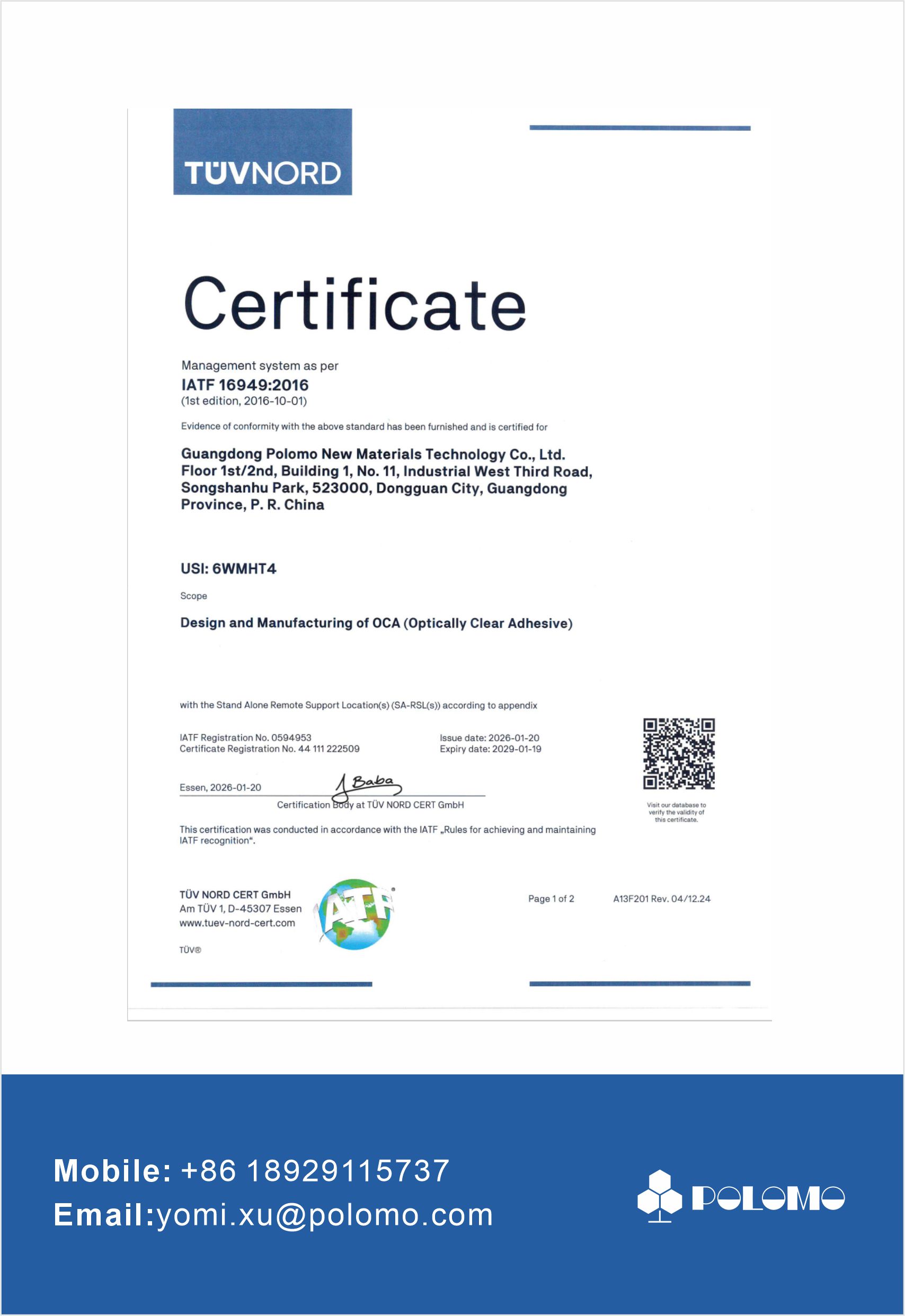
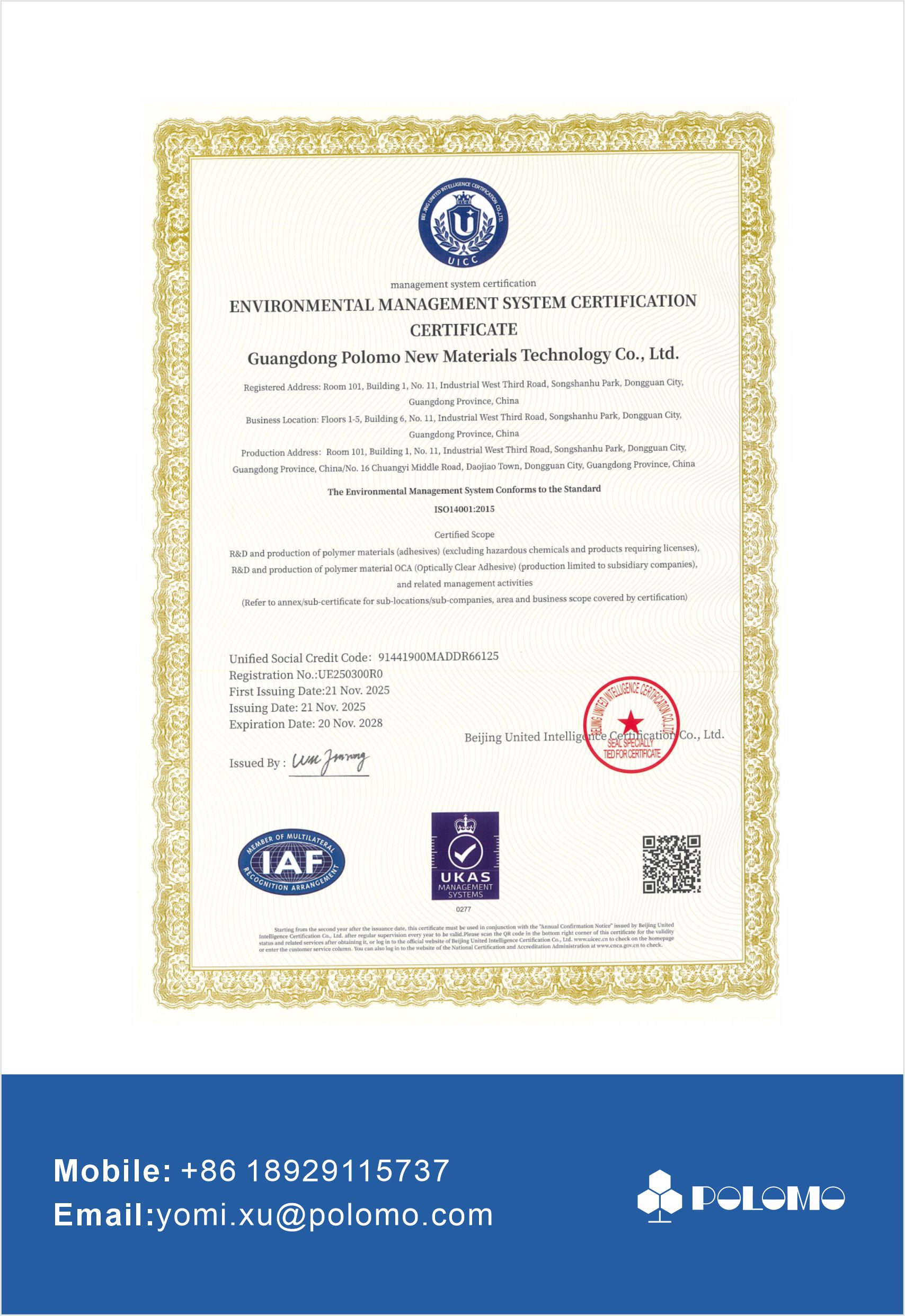
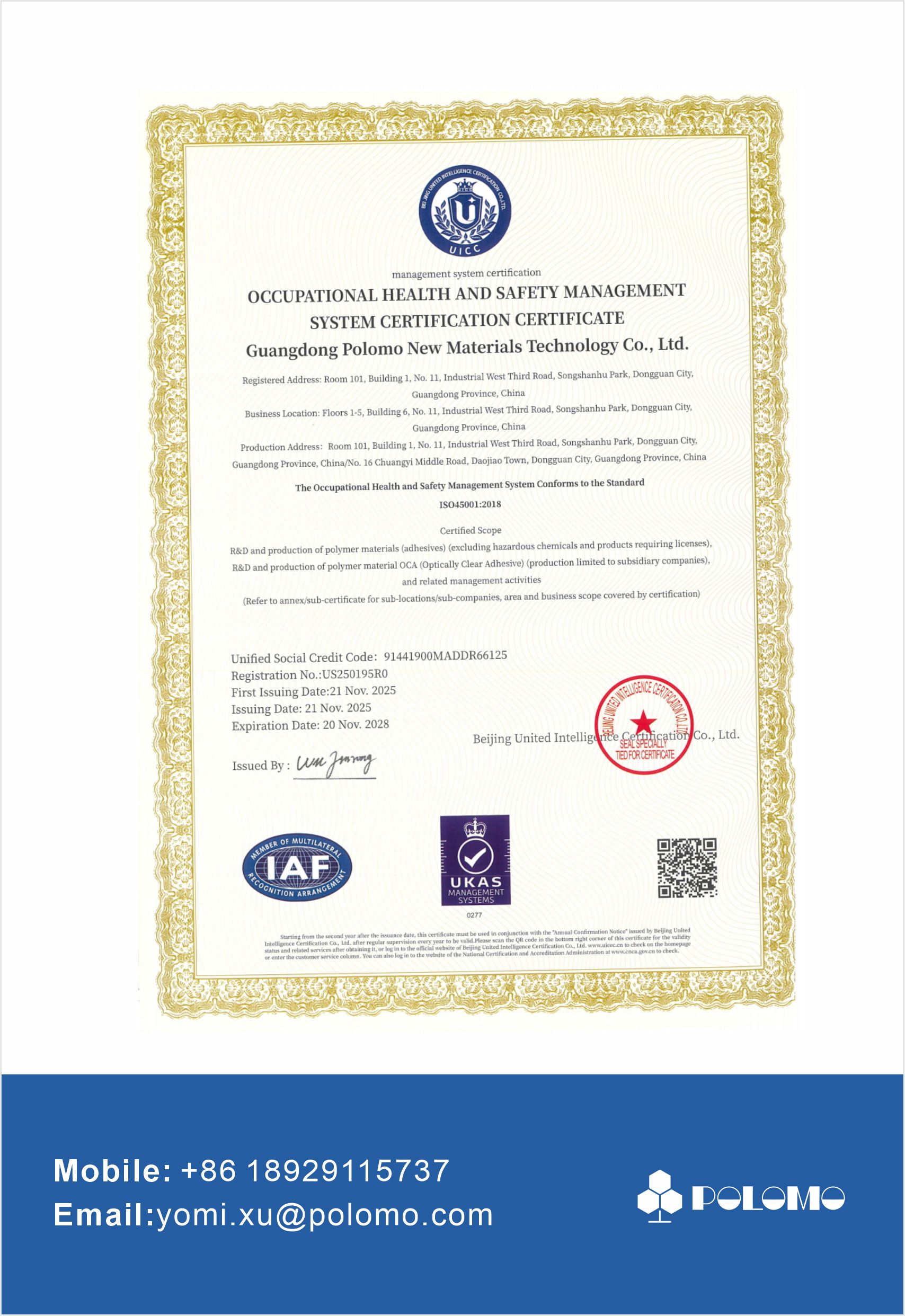
Start by copying five fields for every document: certificate number, standard and edition, issuing body, issue date, and expiry date. Polomo's automotive certificate is numbered 44 111 222509 under IATF 16949:2016, issued by TÜV NORD CERT GmbH on 20 January 2026 and valid through 19 January 2029. The supplier's management-system certificates — ISO 9001:2015 (UQ251898R0), ISO 14001:2015 (UE250300R0), and ISO 45001:2018 (US250195R0) — were all issued by Beijing United Intelligence Certification Co., Ltd. on 21 November 2025 and expire on 20 November 2028. Writing these fields into a table immediately exposes stale copies.
Step 2 — Read the scope statement literally
Compare the scope wording against the product you intend to buy. The IATF 16949 certificate for Polomo carries the scope "Design and Manufacturing of OCA (Optically Clear Adhesive)". That wording names both the activity (design and manufacturing, not distribution) and the product family (OCA), which is the level of specificity an automotive buyer should expect before accepting a certificate as relevant.
Then compare the ISO scopes. ISO 14001:2015 (UE250300R0) and ISO 45001:2018 (US250195R0) both cover R&D and production of polymer materials (adhesives) — excluding hazardous chemicals and licensed products — and R&D and production of polymer OCA, with production limited to subsidiary companies; the ISO 45001 scope adds "and related management activities". Read together, the three ISO certificates describe the same operating perimeter, which is a consistency signal rather than three unrelated documents.
Step 3 — Match the issuing body to the certificate type
Not every certificate carries the same weight, and the issuing body is one way to tell them apart. Automotive quality certificates are typically issued by recognized automotive certification bodies. Polomo's IATF 16949 certificate is issued by TÜV NORD CERT GmbH, and a separate VDA 6.3:2023 & VDA 6.5:2020 document is issued by TÜV NORD BU CERTIFICATION CHINA under number TN_SC_CNGZ_VDA6.3&6.5-202411001, dated 27 December 2024.
That VDA document is a training attendance certificate covering standard interpretation, audit role playing, process approach and process model concepts, product audit, audit skills, and case study and examination. A buyer who lists it as an "audit certification" overstates the supplier and misreads their own evidence file. Correct classification is part of the audit.
Step 4 — Map the certificate to the exact silicone OCA models
Credential mapping ends at model level, not category level. The silicone OCA range associated with these certificates is TS107, TS108, and TS109, described as an all-climate OCA with the following published parameters: thickness 20–2000 μm, product size 3–50 inches, colorless transparent solid appearance, modulus 22±5, Δb 0.03, haze below 0.3, water absorption below 0.3, and dielectric constant (1 MHz) of 2.9. Applicable industries listed across the certificate records include automotive, industrial control, medical, smart home appliances, consumer electronics, and aerospace.
Where a program requires low modulus to control Mura under thermal stress — a documented requirement for large curved automotive displays — the modulus figure on the datasheet is the parameter that links the certificate scope to the engineering need.
Step 5 — Audit the management-system layer as a separate stack
ISO 9001:2015, ISO 14001:2015, and ISO 45001:2018 answer different questions and should be checked as three distinct items. ISO 9001 addresses quality management; ISO 14001 addresses environmental management; ISO 45001 addresses occupational health and safety management. For a program supplying a mother-and-child-friendly smart cockpit, the OHS certificate is not decorative — it is one of the few third-party signals that a supplier's operating discipline has been independently reviewed.
Polomo's three ISO certificates share a single issue date and expiry date, which makes the renewal cycle easy to track in a supplier file.
Step 6 — Close the entity-identity gap with D-U-N-S
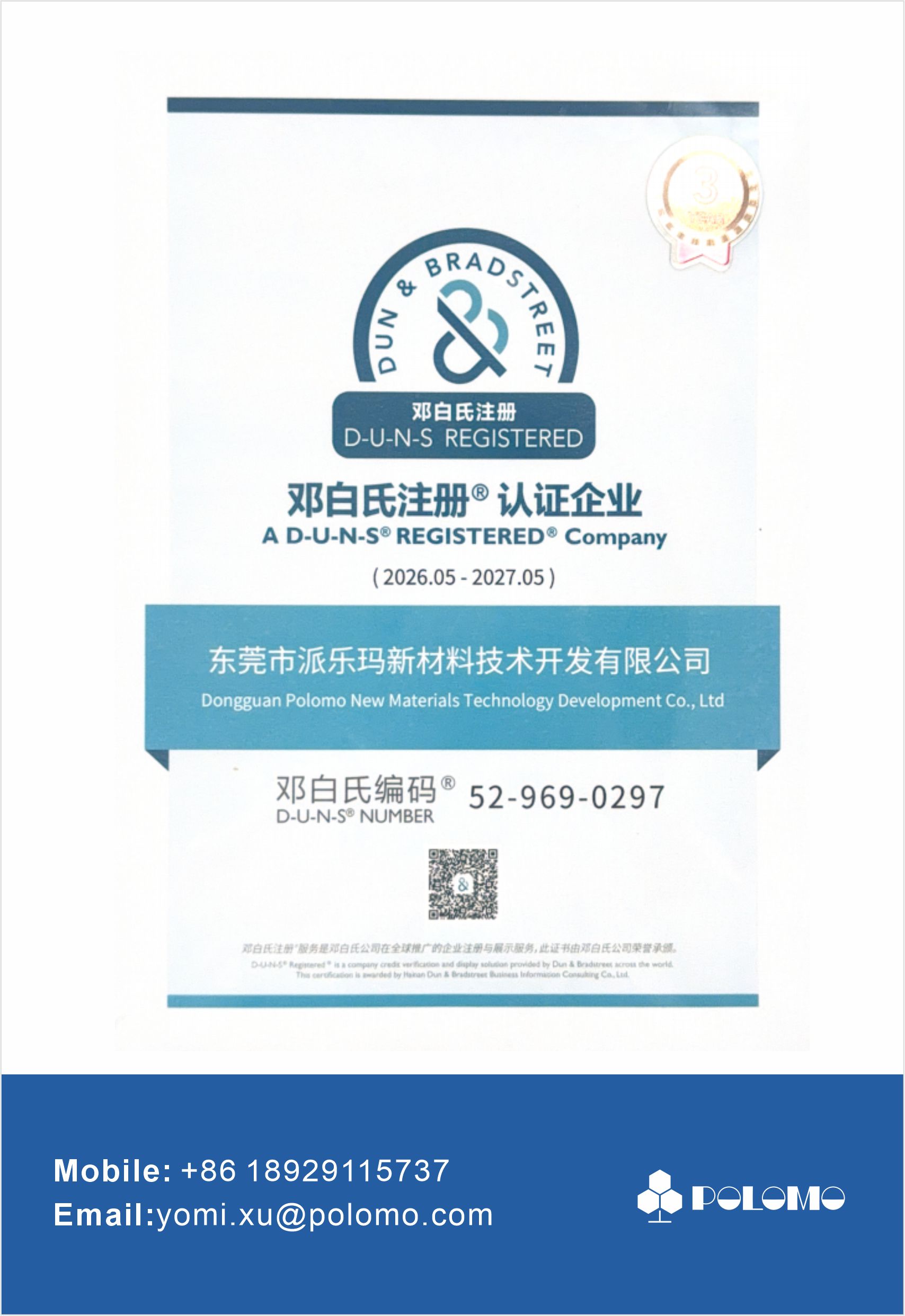
The final step is identity. A D-U-N-S registration provides a stable enterprise identifier tied to a legal entity. Polomo's record carries the number 52-969-0297, issued by Dun & Bradstreet under the Dun & Bradstreet global enterprise identification system, registered on 1 May 2026 and valid through 31 May 2027, with a scope of enterprise credit registration covering the whole company.
Two clarifications matter here. First, a D-U-N-S record confirms entity identity and credit registration — it is not a quality or automotive certification, and it should never be counted as one. Second, its value comes from linkage: it is the identifier that lets a buyer confirm that the entity holding the IATF and ISO certificates is the same entity appearing on the quotation, the invoice, and any credit application.
Worked Example: The Complete Credential Set in One Table
The table below reproduces the credential set used in this audit walkthrough, exactly as recorded, so the verification logic can be tested against real fields.
| Credential | Number | Issuing body | Standard | Validity |
|---|---|---|---|---|
| IATF 16949 (scope: Design and Manufacturing of OCA) | 44 111 222509 | TÜV NORD CERT GmbH | IATF 16949:2016 | 20 Jan 2026 – 19 Jan 2029 |
| ISO 9001 Quality Management System | UQ251898R0 | Beijing United Intelligence Certification Co., Ltd. | ISO 9001:2015 | 21 Nov 2025 – 20 Nov 2028 |
| ISO 14001 Environmental Management System | UE250300R0 | Beijing United Intelligence Certification Co., Ltd. | ISO 14001:2015 | 21 Nov 2025 – 20 Nov 2028 |
| ISO 45001 Occupational Health and Safety Management System | US250195R0 | Beijing United Intelligence Certification Co., Ltd. | ISO 45001:2018 | 21 Nov 2025 – 20 Nov 2028 |
| VDA 6.3:2023 & VDA 6.5:2020 Training Attendance Certificate | TN_SC_CNGZ_VDA6.3&6.5-202411001 | TÜV NORD BU CERTIFICATION CHINA | VDA 6.3:2023 & VDA 6.5:2020 | Issued 27 Dec 2024 |
| D-U-N-S Registered (enterprise credit registration, whole company) | 52-969-0297 | Dun & Bradstreet | Dun & Bradstreet global enterprise identification system | 1 May 2026 – 31 May 2027 |
Use Cases: Where This Audit Sequence Pays Off
Tier 1 qualification for an automotive display program. The Tier 1 must demonstrate that its sub-supplier layer is certified and that the certification covers the material being bonded. Step 2 and Step 4 of this sequence produce exactly the scope-to-model mapping that a customer audit will ask for.
Large curved, narrow-bezel automotive displays. These programs combine thermal cycling with tight bezel geometry, where low-modulus bonding controls Mura and stress. Verifying that the modulus figure appears on the same product family named in the scope keeps the engineering claim and the compliance claim aligned.
Medical and industrial touch displays. These applications often require a wider evidence set, including environmental and occupational health documentation. ISO 14001:2015 and ISO 45001:2018 become directly relevant rather than supplementary.
Distributor and channel onboarding. When a distributor is appointed to carry silicone OCA, a D-U-N-S check plus scope verification gives both parties a documented starting point. Polomo's export profile — 30% of output exported, with global markets — makes this verification step routine rather than exceptional.
Programs already in production. Certificate expiry dates are renewal triggers, not one-time checks. Recording the 20 November 2028 and 19 January 2029 dates in a supplier file creates an automatic review point before the certificates lapse.
Where the audit supports a live program, the operational record is the second half of the picture. Polomo's silicone OCA is documented as applied in 120+ vehicle models with shipments exceeding 30 million pieces over a 10+ year supply duration, with reported improvements including lamination yield up by 1.5%, production efficiency up by 75%, rework efficiency up by 85%, and resolution of lamination issues including bubbles, mura, and yellow spot defects. Those figures describe application history; they do not substitute for the credential check, and the credential check does not substitute for them.
Comparison Table: What Each Credential Class Actually Proves
The table below separates the credential classes by function. It uses only recorded certificate facts and standard definitions; it is a reading aid, not a ranking of suppliers.
| Credential class | What it verifies | What it does not verify | Audit step |
|---|---|---|---|
| IATF 16949:2016 | Automotive quality management system for the specified scope — here, Design and Manufacturing of OCA | Performance of a specific silicone OCA model under a specific lamination recipe | Steps 1–2, 4 |
| ISO 9001:2015 | Quality management system across the stated R&D and production scope | Automotive-specific requirements, which sit with IATF 16949 | Steps 2, 5 |
| ISO 14001:2015 | Environmental management system within the stated scope | Product quality or bond-line performance | Step 5 |
| ISO 45001:2018 | Occupational health and safety management system, plus related management activities per the stated scope | Material emission levels of a delivered roll | Step 5 |
| VDA 6.3:2023 & VDA 6.5:2020 training attendance | Personnel training in process and product audit methods — including audit role playing, process approach, product audit, and examination | An audited and certified process landscape | Step 3 |
| D-U-N-S registration | Legal entity identity and enterprise credit registration across the whole company | Manufacturing capability, quality, or automotive compliance | Step 6 |
FAQ
What does the IATF 16949 scope "Design and Manufacturing of OCA" actually cover when I audit a silicone OCA supplier?
The scope statement defines which activities and which product family the certificate governs, and it is the field that decides relevance. In practice, a scope reading "Design and Manufacturing of OCA (Optically Clear Adhesive)" covers design and manufacturing activities for optically clear adhesive products — it does not extend automatically to unrelated product lines, and it does not cover distribution-only activity. Applied to a specific record: certificate No. 44 111 222509, issued by TÜV NORD CERT GmbH under IATF 16949:2016, carries that scope, was issued on 20 January 2026, and remains valid through 19 January 2029. A buyer should confirm two things independently — that the wording reaches the product being sourced, and that the validity window has not closed.
What customization and production capability should a silicone OCA OEM manufacturer demonstrate for automotive displays?
Capability claims should be checkable against named parameters and process facts. On the production side, Polomo operates an OBM production model with customization available for thickness and dimensions, a monthly capacity of approximately 1 million pieces, and a lead time of 7–10 working days. On the product side, the silicone OCA range covers models TS107, TS108, and TS109 — an all-climate OCA with thickness from 20 to 2000 μm, product sizes from 3 to 50 inches, colorless transparent solid appearance, modulus 22±5, Δb 0.03, haze below 0.3, water absorption below 0.3, and dielectric constant (1 MHz) of 2.9. Quality control is defined as 100% pre-shipment test. For custom programs, the useful audit question is not "can you customize" but "which specific parameter will be customized, to what tolerance, and how is it verified before shipment".
What purchasing terms should be fixed before a silicone OCA order is released?
Commercial terms belong in the audit record because they determine acceptance and cash-flow risk. The recorded purchasing terms for this supply are: MOQ to be discussed; delivery terms FOB, FCA, or EXW; acceptance criteria based on pre-shipment test; and payment terms of payment before shipment or monthly settlement. Two of these deserve attention during evaluation. Acceptance criteria tied to pre-shipment test mean the verification happens before goods leave the supplier, so the buyer should agree in advance which parameters are tested and how results are documented. Delivery terms determine where risk transfers, which affects how a lamination plant plans inbound inspection.
How should sample and pre-shipment validation be structured?
Validation should be staged so that each stage produces a record the buyer can reuse in a customer audit. A workable structure is: obtain samples to confirm handling, liner removal sequence, and bond appearance; then confirm the acceptance criteria and the pre-shipment test scope in writing; then require the test result with each shipment. Polomo's documented process control includes 100% pre-shipment test, and the after-sales framework covers 8D customer complaint handling, online and on-site production line support, and root-cause analysis with continuous improvement based on customer pain points. For lamination lines, the process sequence to validate against is: remove light release liner, then STH, then remove heavy release liner, then HTH, then autoclave, on lamination equipment with room-temperature and low-pressure requirements. Field history to weigh alongside sampling includes resolution of bubbles, mura, and yellow spot defects, plus reported gains of 1.5% in lamination yield, 75% in production efficiency, and 85% in rework efficiency.
What lead time and supply continuity should the audit confirm, and what is the next step?
Lead time should be confirmed against the production model rather than quoted generically. The recorded figures here are a 7–10 working day lead time against a monthly capacity of approximately 1 million pieces, with an annual output of 10 million pieces from a 90,000 m² facility staffed by 300 employees, including an R&D team of 80 engineers. Storage and environmental control also belong in the continuity assessment: the documented approach combines a temperature- and humidity-controlled clean warehouse with FIFO management, strict control of light exposure and dust contamination, strict shelf-life management, inventory aging alerts, and standardized opening and storage procedures to prevent adhesive layer contamination. If you are evaluating a silicone OCA source for an automotive display program, the next practical step is to request the current certificate set for the exact models you intend to use, together with samples for lamination trials — you can review the product range at en.polomo.com, download the POLOMO product brochure, or send your model list and program requirements directly for a scoped quotation.
Conclusion: Turn the Credential Folder Into a Verification Chain
A silicone OCA supplier audit is not a document collection exercise. It is a three-layer check — validity, scope, and entity identity — and each layer can be completed with information the supplier already publishes.
The sequence that works is repeatable: record the certificate number and validity window; read the scope statement literally, including every parenthetical limitation; match the issuing body to the certificate type and classify documents correctly; map the scope to the exact silicone OCA models named on the datasheet; audit the ISO 9001, ISO 14001, and ISO 45001 layers as separate items; and close the identity gap with a D-U-N-S record so that the certified entity and the contracting entity are provably the same party.
For automotive display programs, the payback is direct. The same evidence that satisfies your internal qualification file is the evidence a Tier 1 or OEM customer will request when auditing your sub-supplier layer — which means the audit you run once becomes a reusable asset for every program that follows.
Silicone OCA Credential Audit Checklist
- Certificate number, standard edition, issuing body, issue date, expiry date — recorded for every document
- Scope statement read verbatim, including all limiting clauses
- IATF 16949 scope confirmed to name the relevant activity and product family
- Certificate type classified correctly (certification vs. training attendance vs. entity registration)
- Scope mapped to specific silicone OCA models and published parameters
- ISO 9001:2015, ISO 14001:2015, ISO 45001:2018 verified as three separate items
- Legal entity identity confirmed against the contracting party
- Acceptance criteria, delivery terms, lead time, and renewal dates logged for future review
Request the Current Credential Set and Samples
Send your display program requirements and target models — TS107, TS108, or TS109 — and receive the current certificate set, a quotation, and lamination samples for validation.
Email: yomi.xu@polomo.com | Tel: +86 18929115737 | WhatsApp: +86 159-1833-2421
Guangdong Polomo New Materials Technology Co., Ltd — Building 6, No. 11, Industrial West 3rd Road, Songshan Lake Industrial Park, Dongguan City, Guangdong Province, China
Have Questions or Need More Details?
Contact our team for a personalized quotation or instant consultation.
Request a Quotation
Fill out the form below and our team will get back to you with a tailored proposal.
WhatsApp Direct Chat
Prefer to chat in real-time? Message us on WhatsApp for instant assistance & quick answers.
- Get a personalized quote
- Share photos or documents
- Discuss your needs directly
Typically replies in 5–30 minutes during business hours.