
Silicone OCA vs Acrylic OCA: Better Choice for Auto Displays
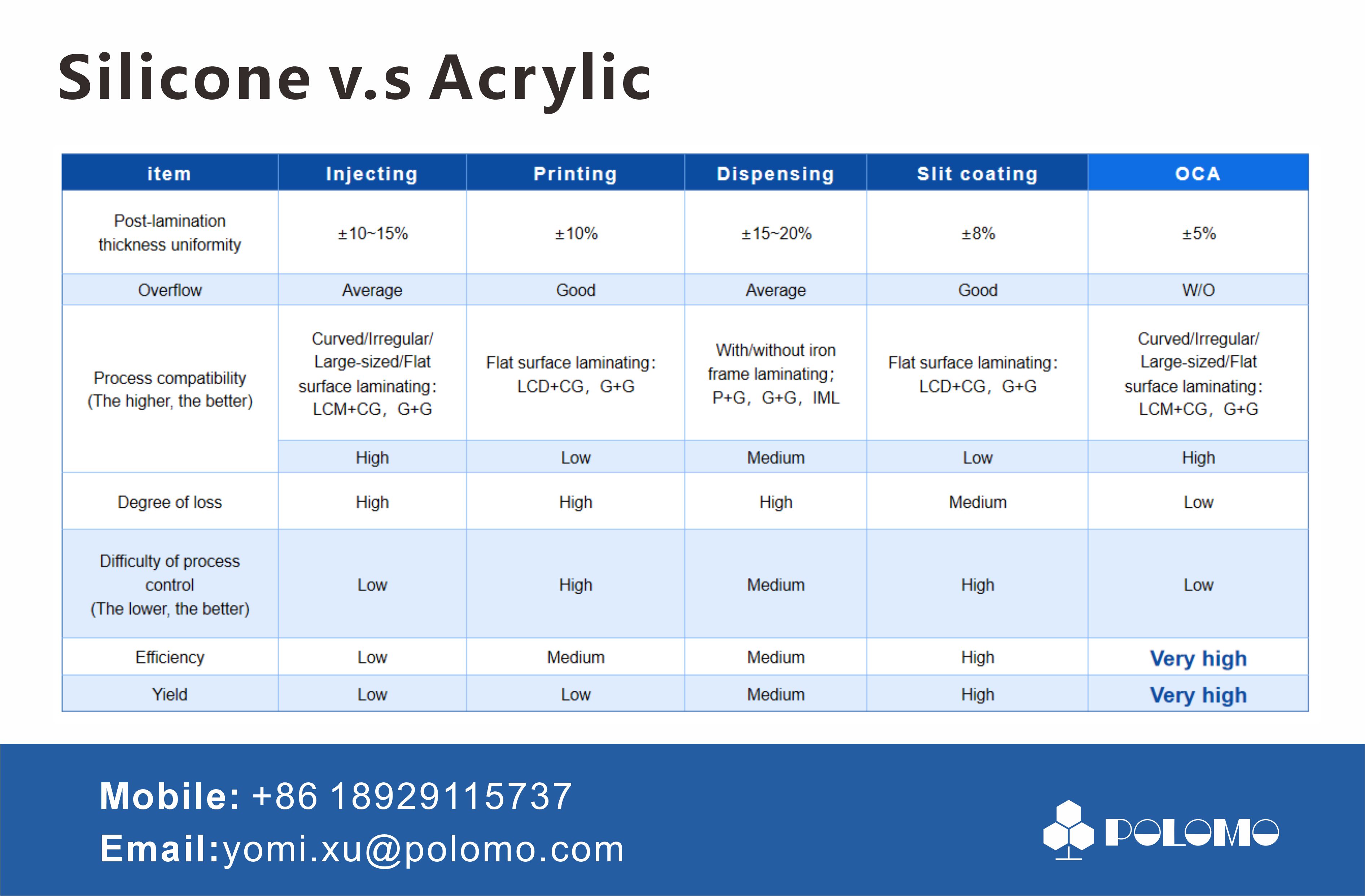
Silicone OCA and acrylic OCA differ in modulus, weather resistance, and processing yield.
Silicone OCA vs Acrylic OCA: Better Choice for Auto Displays
When automotive display programs move from development to production, material selection for optical bonding becomes a high-stakes decision. The optically clear adhesive (OCA) determines not only initial optical quality but also long-term reliability, lamination yield, and total cost of ownership. This guide compares silicone OCA and acrylic OCA using measurable criteria, and explains why silicone OCA is increasingly the preferred option for automotive displays. It also provides a supplier evaluation framework, using Guangdong Polomo New Materials Technology Co., Ltd (Polomo) as a reference manufacturer.
Why the OCA Decision Is Critical in Automotive Display Lamination
Full lamination of automotive displays bonds cover glass, touch sensors, and display panels with a transparent adhesive layer. The adhesive must withstand extreme temperatures, sunlight, vibration, and humidity without visual defects. With the industry moving toward larger, curved, and narrow-bezel displays, stress management becomes more challenging. Traditional acrylic OCA has a high elastic modulus, which can cause mura (irregular brightness) in large-size bonding, especially under thermal stress. Its lower molecular bond energy also leads to inferior weather resistance, potentially causing high-temperature bubble rebound, yellow spots, and delamination during long-term use. These defects not only harm the end-user experience but also create warranty claims and quality-issue costs for suppliers.
Automotive Display Trends and OCA Market Context
The global optically clear adhesives market was valued at approximately USD 2.1 billion in 2024, with automotive displays accounting for about 20% of total OCA market revenue, according to Verified Market Research. Asia Pacific already dominates the automotive adhesives market with a 51% revenue share in 2024, according to Precedence Research. The same report projects that silicone-based adhesives in the automotive market will grow at a CAGR of 8.8% from 2025 to 2032. This context confirms that automotive is a core growth segment for OCA, and that material choice directly affects competitiveness for display makers and Tier 1 module suppliers.
Key Technical Differences: Polomo Silicone OCA vs Acrylic OCA
Polomo silicone OCA is designed with an extremely low elastic modulus, which provides effective stress absorption during lamination and temperature fluctuations. This reduces the risk of mura and bubble formation, even on curved, irregular, or narrow-bezel displays. In contrast, acrylic OCA has a high modulus, especially at low temperatures, making it less suitable for large-area bonding where thermal expansion mismatches occur.
Measured differences between silicone and acrylic OCA include:
- Yellowing resistance: Polomo silicone OCA achieves a Δb* value of 0.03, while acrylic OCA typically measures 0.5. A lower Δb* value means better long-term visual clarity.
- Dielectric constant: Silicone OCA has a dielectric constant of 2.9 at 1 MHz, whereas acrylic OCA is above 6.3. This matters for touch sensitivity and signal integrity.
- Odor and VOC: Polomo silicone OCA achieves an odor level of 2.5, while acrylic OCA typically reaches 3.5/4 under high-temperature conditions. Lower odor improves cabin comfort.
- Weather resistance: Polomo silicone OCA supports temperature cycling from -40°C to 120°C; acrylic OCA is generally rated from -40°C to 95°C.
Polomo silicone OCA is available in models TS107, TS108, and TS109, with thickness from 20 to 2000 µm, product size from 3 to 50 inches, haze below 0.3%, and water absorption below 0.3%. These specifications make it suitable for high-reliability display applications across automotive, industrial, medical, and aerospace sectors.
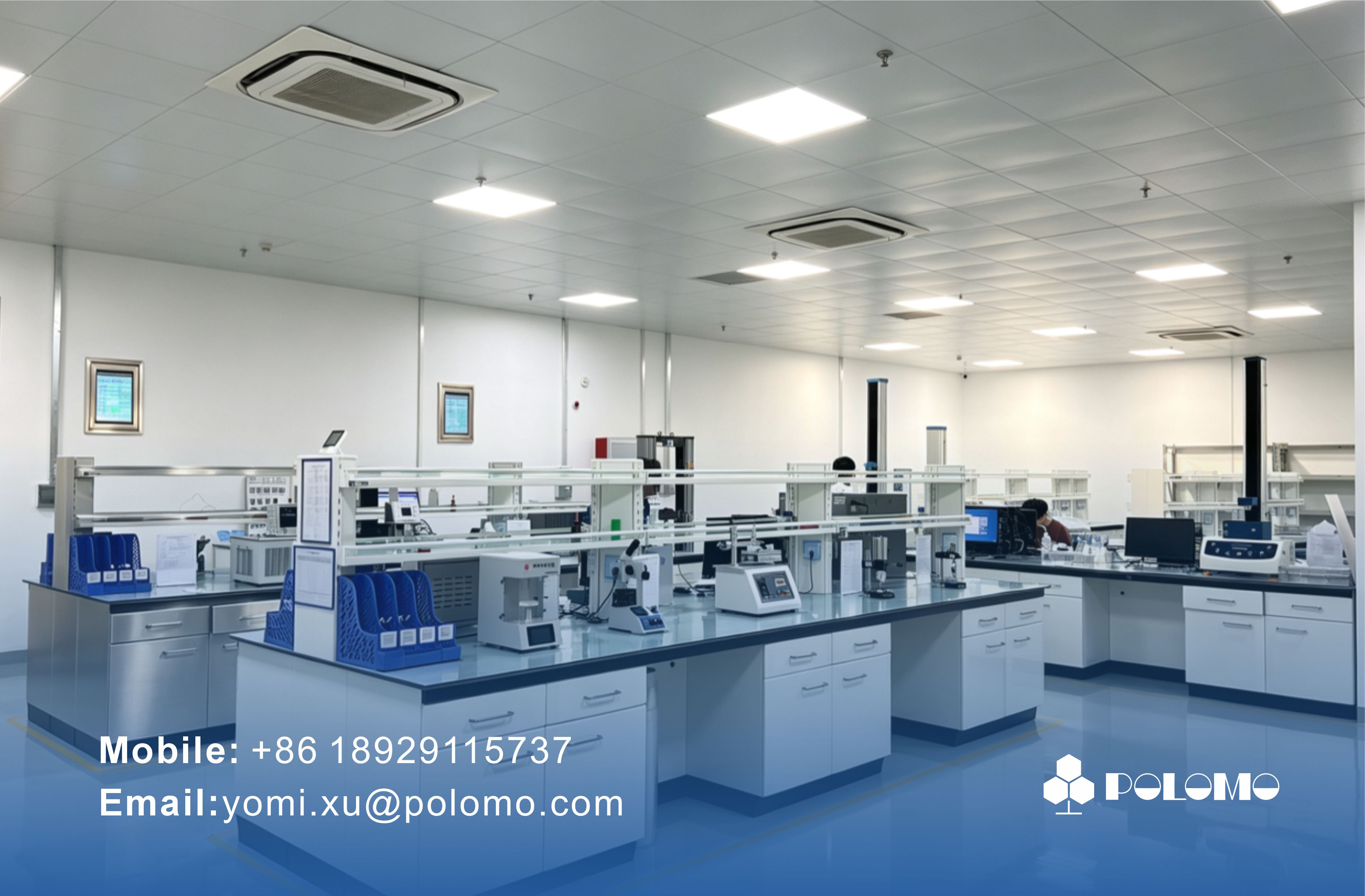
R&D capability is essential for tailoring silicone OCA to program-specific requirements.
How to Evaluate a Silicone OCA Supplier for Your Program
Selecting the right OCA is not just about material chemistry; supplier qualification is equally important. Use the following steps to compare suppliers and technologies objectively.
- Define the display's environmental and mechanical requirements. Identify temperature range, UV exposure, humidity levels, and physical form factor (flat, curved, narrow bezel).
- Compare key adhesive properties. Focus on elastic modulus, Δb*, haze, water absorption, dielectric constant, and odor level. These parameters directly influence optical quality and reliability.
- Verify weather resistance. Request data from temperature cycling tests (e.g., -40°C to 120°C) and 85°C/85% RH high-temperature high-humidity tests. Confirm that the data is reproducible and traceable.
- Analyze lamination yield and process efficiency. Silicone OCA provides significant advantages in yield, labor efficiency, and equipment requirements. Higher yield reduces rework and waste, which directly impacts cost.
- Calculate total cost of ownership. Material cost is only one component. Include yield loss, quality complaints, compensation risks, and long-term warranty costs. Polomo silicone OCA and acrylic OCA have comparable material costs, but silicone OCA outperforms on overall cost performance due to fewer defects and lower maintenance.
- Audit the manufacturer's quality control and storage practices. A reliable supplier should operate temperature- and humidity-controlled clean warehouses, manage FIFO, enforce shelf-life controls, and prevent adhesive layer contamination through standardized opening and storage procedures.
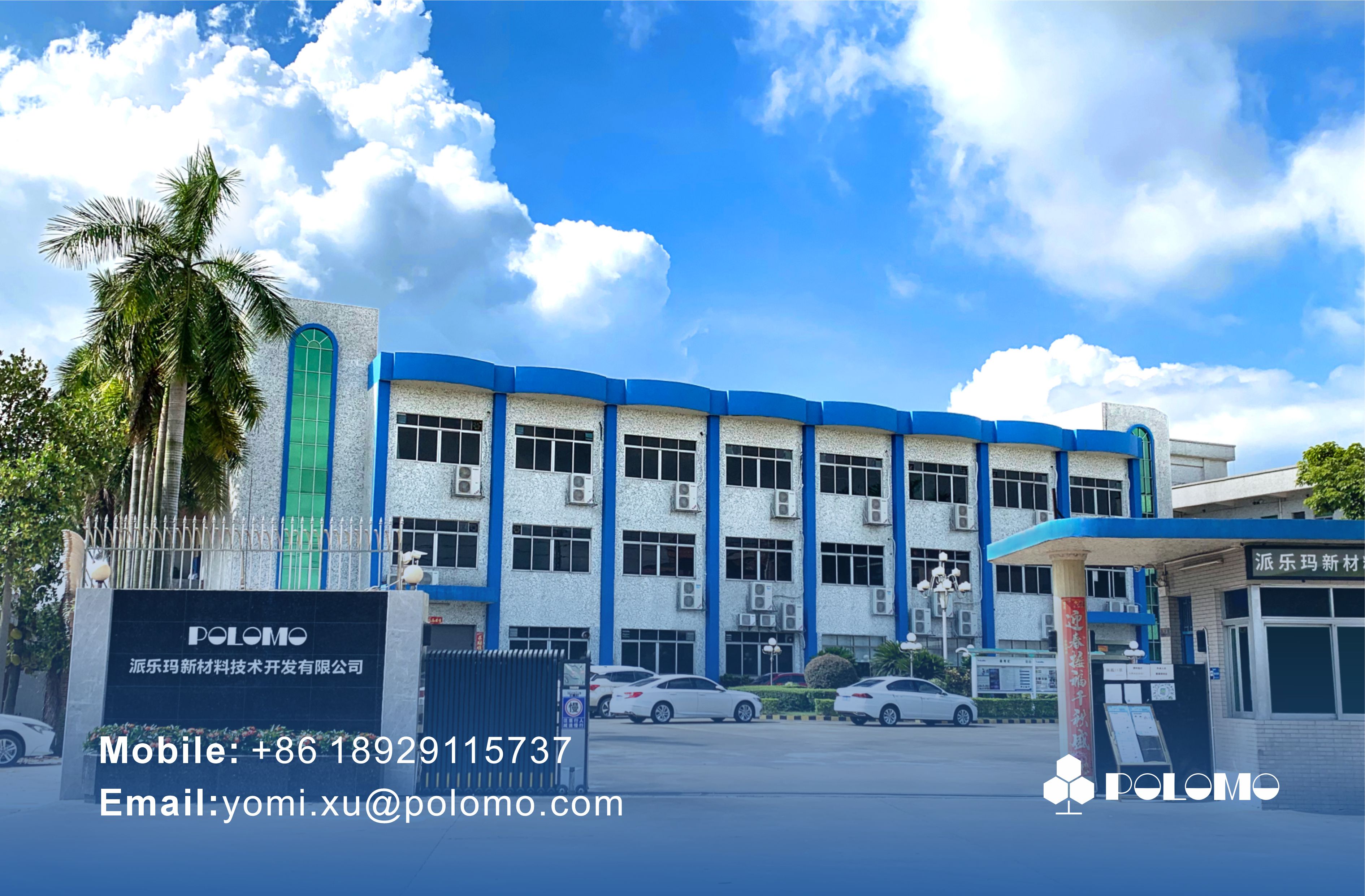
Polomo operates an adhesives R&D and manufacturing base in Songshan Lake, Dongguan.
Application Use Cases: Where Silicone OCA Delivers the Most Value
Automotive displays remain the primary high-value segment for Polomo silicone OCA. Common applications include center displays, digital instrument clusters, passenger entertainment displays, rear-seat entertainment displays, armrest displays, streaming rear-view mirrors, HUDs, air-conditioning displays, and other human-machine interface panels. In these applications, reliability and optical performance are critical. The material is also used in industrial control, medical, smart home, commercial display, consumer electronics, aerospace, marine, and education sectors. For large curved and narrow-bezel modules, the low-modulus behavior of silicone OCA supports higher bonding efficiency and yield, reducing production cost while improving durability.
Controlled storage and FIFO management prevent contamination and aging in adhesive materials.
Comparison Table: Silicone OCA vs Acrylic OCA at a Glance
| Comparison Parameter | Polomo Silicone OCA | Acrylic OCA |
|---|---|---|
| Elastic Modulus | Stable under high/low temperatures; ultra-low modulus (22±5) | High modulus, especially at low temperatures |
| Δb* (Yellowing Index) | 0.03 | 0.5 |
| Dielectric Constant (1 MHz) | 2.9 | >6.3 |
| Odor Level | 2.5 | 3.5/4 |
| Weather Resistance Range | -40°C to 120°C | -40°C to 95°C |
| Lamination Efficiency & Yield | High | Lower; more risk of mura and bubbles |
| Material Cost | Comparable to acrylic | Comparable to silicone |
| Total Long-Term Cost | Superior due to higher yield and fewer quality issues | Higher risk of defects, compensation, and rework |
| Best-Fit Applications | Automotive, industrial, medical, aerospace, high-reliability displays | Less demanding, smaller-size applications |
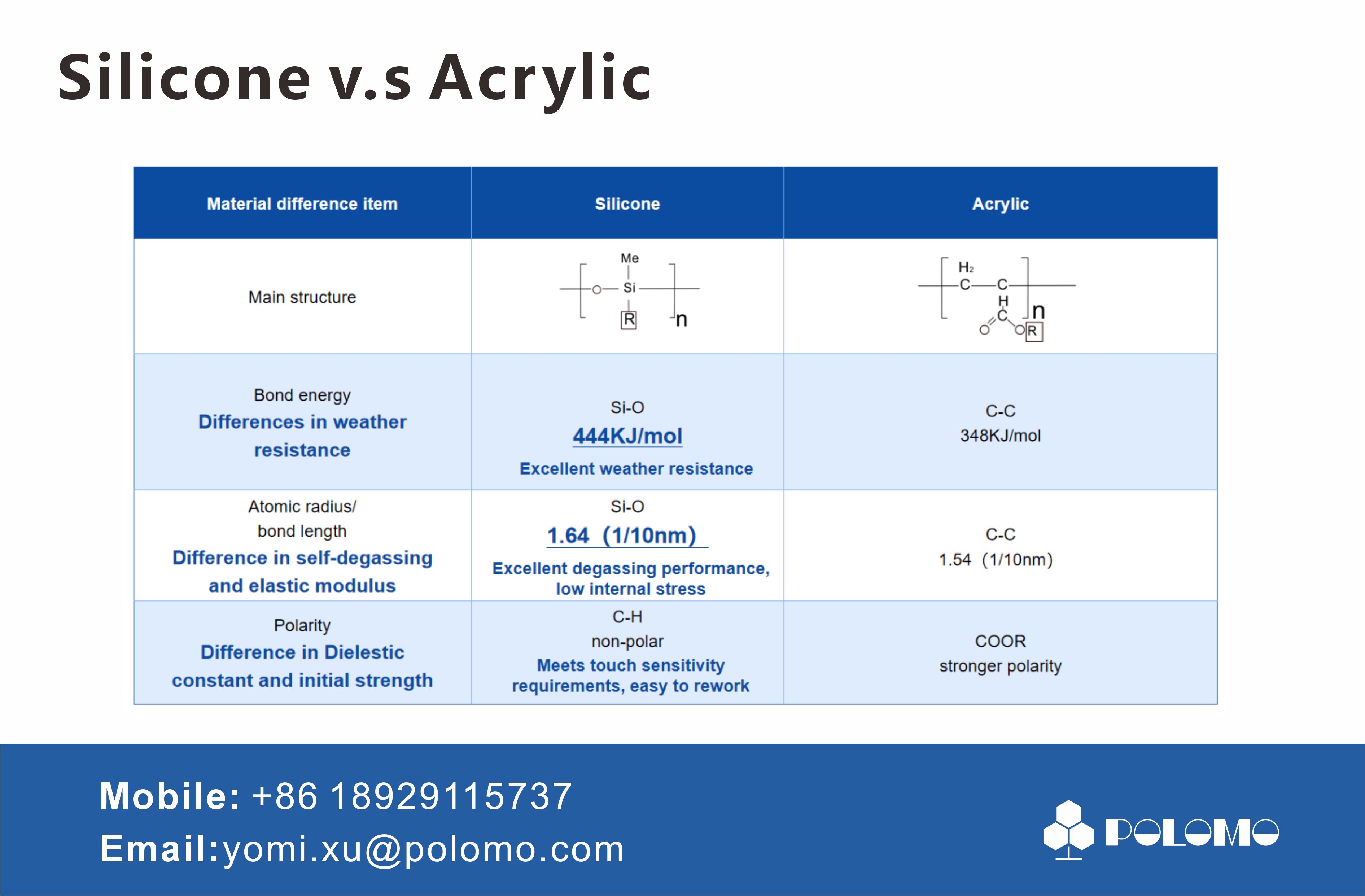
Quantified comparison results highlight why silicone OCA is increasingly preferred for automotive.
Frequently Asked Questions
Is IATF 16949 certification required for silicone OCA suppliers in automotive programs?
Yes. IATF 16949:2016 is the mandatory global quality management standard for automotive suppliers, with a focus on zero-defect manufacturing, according to the International Automotive Task Force. When qualifying a silicone OCA manufacturer, buyers should verify that the supplier operates under IATF 16949-compliant processes and can provide supporting audit documentation.
What are the most important technical differences between silicone OCA and acrylic OCA for automotive displays?
The key differences are elastic modulus, weather resistance, and optical stability. Silicone OCA has a stable low modulus, preventing mura and bubbles in large curved displays. It also offers lower Δb* (0.03 vs 0.5 for acrylic), better weather resistance (-40°C to 120°C vs -40°C to 95°C), lower dielectric constant (2.9 vs >6.3), and lower odor (2.5 vs 3.5/4). These properties make silicone OCA more suitable for demanding automotive environments.
Does silicone OCA cost more than acrylic OCA?
Material costs of silicone OCA and acrylic OCA are comparable. However, silicone OCA provides significant advantages in yield, labor efficiency, and equipment requirements, which reduces quality complaints and compensation risks. The overall long-term cost performance of silicone OCA is therefore superior, even if the unit material price is similar.
What quality controls should a silicone OCA manufacturer have for storage and handling?
A qualified manufacturer should implement standardized environmental control plus FIFO management. Polomo, for example, uses a temperature- and humidity-controlled clean warehouse, strictly controls light exposure and dust contamination, manages shelf life with inventory aging alerts, and follows standardized opening and storage procedures to prevent adhesive layer contamination. These measures are critical for maintaining product consistency from production through lamination.
Which automotive display applications are best suited to Polomo silicone OCA?
Polomo silicone OCA is suited for center displays, digital instrument clusters, passenger entertainment displays, rear-seat entertainment displays, armrest displays, streaming rear-view mirrors, HUDs, air-conditioning displays, and other automotive HMI panels. It is also used in industrial control, medical, smart home, commercial display, consumer electronics, aerospace, marine, and education applications where reliability and optical performance are critical.
Conclusion and Next Steps
For automotive display programs that demand high reliability, optical clarity, and cost control, the comparison increasingly favors silicone OCA over acrylic OCA. Its low modulus prevents stress-related defects, its weather resistance covers the full range of cockpit environments, and its higher lamination yield directly improves production economics. Polomo silicone OCA provides a strong option for these requirements, backed by a 90,000 m² manufacturing base, an 80-person R&D team, and an annual output capacity of 10 million pieces.
Evaluate Polomo silicone OCA for your next display program.
Contact: Yomi Xu | Email: yomi.xu@polomo.com | Tel/WhatsApp: +86 159-1833-2421
Download the product brochure: POLOMO Product Brochure (PDF)
Visit our website: en.polomo.com
Have Questions or Need More Details?
Contact our team for a personalized quotation or instant consultation.
Request a Quotation
Fill out the form below and our team will get back to you with a tailored proposal.
WhatsApp Direct Chat
Prefer to chat in real-time? Message us on WhatsApp for instant assistance & quick answers.
- Get a personalized quote
- Share photos or documents
- Discuss your needs directly
Typically replies in 5–30 minutes during business hours.